

Toad in the Hole
Easy Homemade Recipe with Crispy Yorkshire Pudding
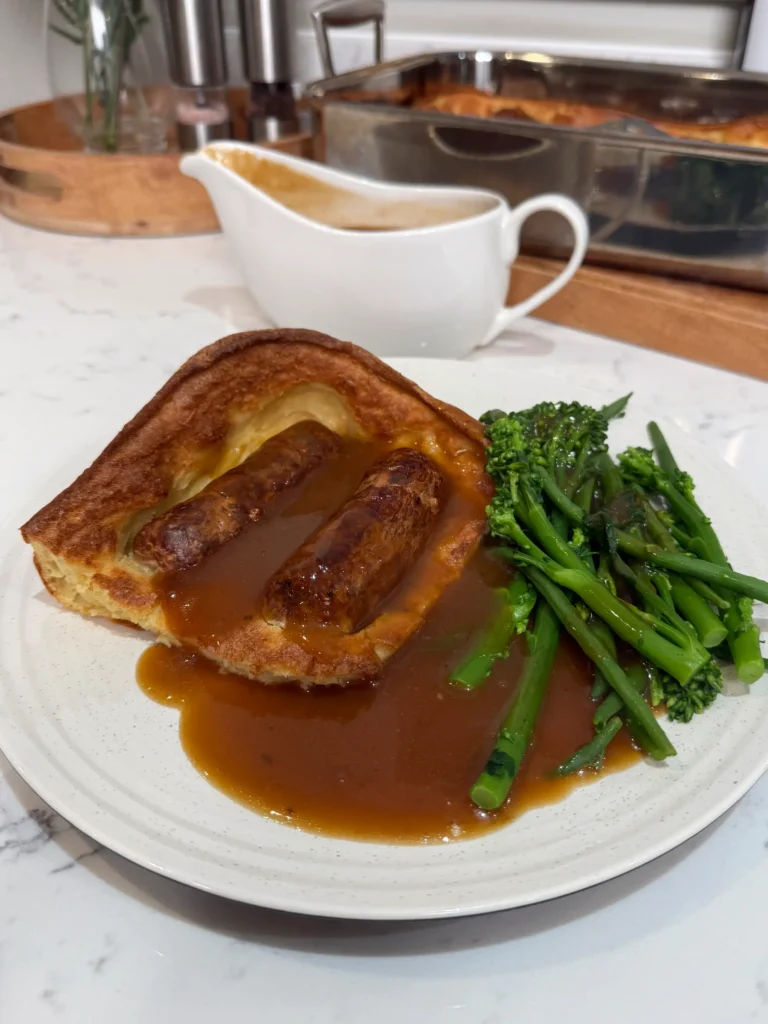
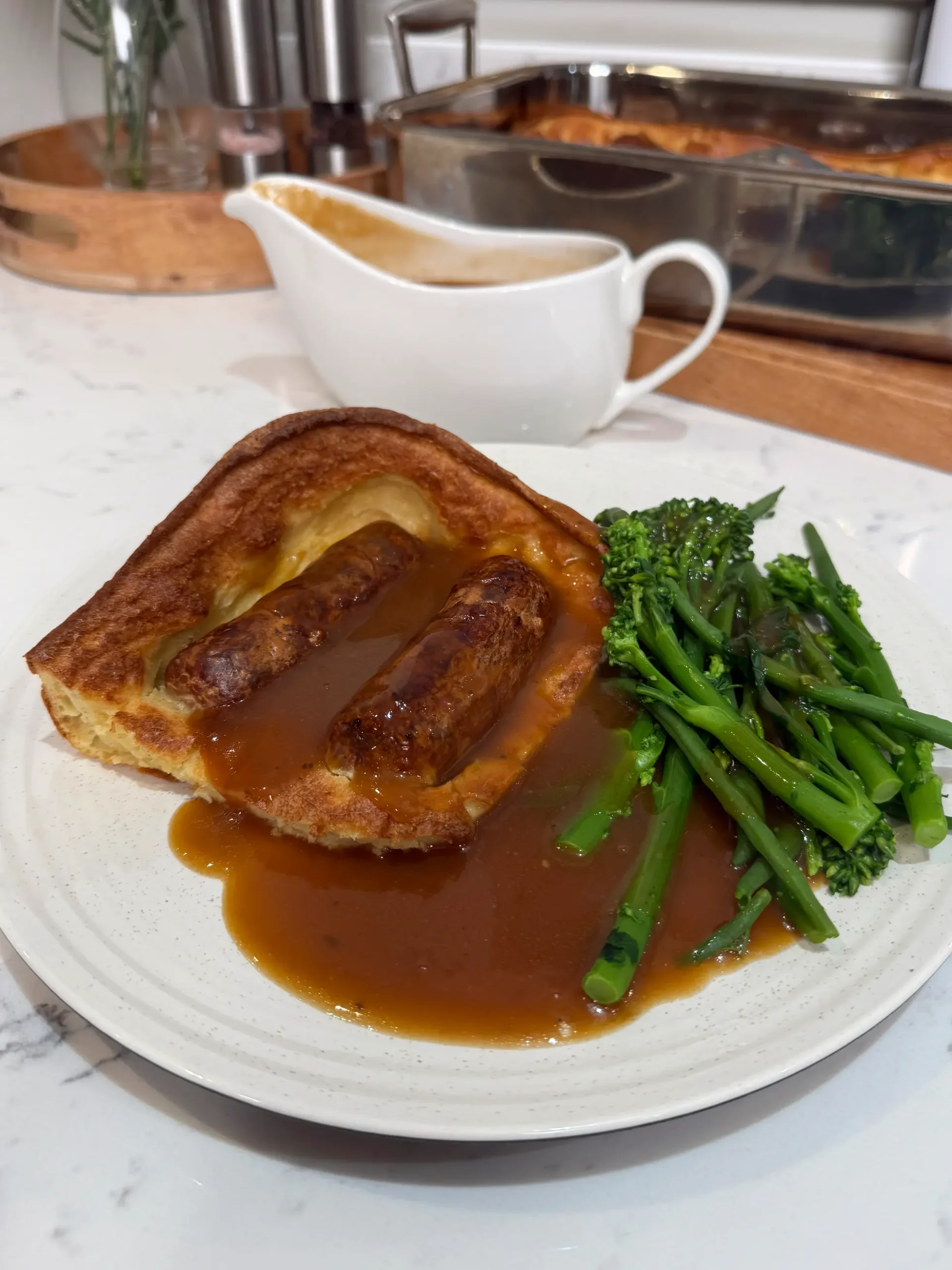
You really can’t beat a proper homemade Toad in the Hole. It’s one of those classic British dinners that never gets old. Juicy sausages surrounded by golden, crispy Yorkshire pudding, served with vegetables and absolutely loads of gravy.
It’s simple, hearty comfort food, and when it’s made properly, it’s absolutely brilliant.
For me, the best bit is the Yorkshire pudding. You want it beautifully risen around the edges, golden and crispy on top, with that slightly softer, almost custardy texture underneath where the batter has cooked around the sausages.
Then you’ve got the sausages, which have already started to brown before the batter goes anywhere near them.
And of course, there’s the gravy.
You can make the best Toad in the Hole in the world, but if you serve it without a decent amount of gravy, something’s missing.
This recipe uses just a handful of everyday ingredients: sausages, flour, eggs, milk, water, Dijon mustard and a little oil.
The batter is incredibly straightforward. I start with the flour and eggs, gradually whisk in the milk in two stages, then add the water, mustard and salt. Once everything is smooth, I pour it into a jug and pop it in the fridge while the sausages start cooking.
After 15 minutes in a hot metal roasting tin, the sausages are ready for the batter.
Then it’s back into the oven until the Yorkshire pudding has risen beautifully and turned golden brown.
It’s a proper family dinner, and one that proves you don’t need loads of complicated ingredients to make something delicious.
What is Toad in the Hole?
Toad in the Hole is a traditional British dish made by baking sausages in Yorkshire pudding batter.
Despite the rather unusual name, there are no toads involved.
The dish has been around for centuries, although earlier versions weren’t always made with sausages. Historically, different cuts of meat were sometimes cooked in batter as an economical way of making a filling meal.
Over time, sausages became the most familiar version.
Today, it’s one of those dishes that immediately makes you think of proper British home cooking.
It’s particularly popular during the colder months, but I’d happily eat it all year round.
And although it looks impressive when you bring a beautifully risen Yorkshire pudding to the table, it’s actually very easy to make.
Why this easy Toad in the Hole recipe works
There are a few things that make a difference when cooking Toad in the Hole.
Firstly, we’re using a hot oven.
Yorkshire pudding batter needs a good blast of heat to rise properly, so I start the oven at 220°C fan.
Secondly, we’re cooking the sausages before adding the batter.
That gives them time to develop colour and means the roasting tin and oil are already nice and hot when the batter goes in.
Thirdly, we’re using a metal roasting tin rather than a ceramic dish.
Metal conducts heat quickly, which is exactly what you want when making Yorkshire pudding.
And finally, once the batter goes into the oven, we leave it alone.
No opening the oven door every five minutes to see how it’s getting on.
Let the heat do its job.
Choosing the best sausages for Toad in the Hole
Sausages are obviously a pretty important part of this recipe, so it’s worth choosing ones you actually enjoy eating.
I generally prefer good-quality pork sausages with plenty of flavour.
Cumberland sausages are a great option because they’re usually well seasoned with black pepper and herbs.
Lincolnshire sausages work brilliantly too, particularly if you like the flavour of sage.
But there’s absolutely nothing wrong with using ordinary pork sausages from the supermarket.
You don’t need anything fancy.
For this recipe, I’m using 12 sausages, which makes it ideal for a family dinner.
Just remember that sausages can vary quite a lot in size. Particularly thick sausages may need a little longer to cook than smaller ones.
The important thing is that they’re properly cooked through by the time the Yorkshire pudding is ready.
The secret to a perfectly risen Yorkshire pudding
Yorkshire pudding is one of those things that can seem a little intimidating until you understand what’s happening.
The batter itself is incredibly simple.
It’s made with flour, eggs, milk and water.
There’s no baking powder or yeast.
Instead, Yorkshire puddings rise because the moisture in the batter turns into steam when it hits the hot tin.
That steam expands, pushing the batter upwards and creating those beautifully puffed edges.
Meanwhile, the eggs and flour help the structure set as it cooks.
That’s why temperature is so important.
If your oven isn’t hot enough, or your tin is cold when you add the batter, you won’t get the same dramatic rise.
Why I use plain flour
For this recipe, I’m using 225g plain flour.
Plain flour is ideal for Yorkshire pudding because it provides the structure without containing any added raising agents.
You don’t need self-raising flour.
The rise comes from the steam generated during cooking rather than baking powder.
Using self-raising flour can change the texture and isn’t necessary.
If you’re making this recipe in America, plain flour is called all-purpose flour.
Why four eggs make a difference
There are four large eggs in the batter.
Eggs are important because they help create structure as the Yorkshire pudding rises.
As the batter heats up, the egg proteins begin to set, helping the pudding hold its shape.
They also contribute to the rich flavour and golden colour.
It’s important to whisk them thoroughly into the flour so you don’t end up with lumps of dry flour hiding in the batter.
Why I add the milk in two stages
This is a little technique I like using whenever I’m making Yorkshire pudding batter.
I start with the flour and eggs, whisking them together first.
Then I add approximately half the milk and whisk again.
Once that’s smooth, I pour in the remaining milk.
Adding the milk gradually makes it much easier to create a smooth batter without loads of lumps.
If you pour all the liquid into the flour at once, it can be harder to incorporate everything evenly.
It only takes a few extra seconds, but it’s worth doing.
Why there’s water in the Yorkshire pudding batter
Alongside the 300ml milk, I’m adding 75ml water.
Water helps create a slightly lighter batter by adjusting the consistency without adding more milk solids or fat.
As it heats up, the moisture turns into steam, which contributes to the rise.
You still get richness from the milk and eggs, but the water helps keep the batter from becoming too heavy.
It’s a simple addition that works really well.
Why I add Dijon mustard
This is something slightly different from a very traditional Yorkshire pudding batter.
I’m adding one tablespoon of Dijon mustard.
Don’t worry, it doesn’t suddenly make the whole dish taste overwhelmingly of mustard.
It brings a gentle sharpness and savoury flavour that works brilliantly with pork sausages.
Sausages and mustard are a classic combination anyway, so adding a little directly to the batter makes complete sense.
Dijon is particularly good because it has a smooth consistency and mixes easily into the batter.
If you prefer a more traditional Yorkshire pudding flavour, you can leave it out.
But I think it’s a lovely addition.
Should Yorkshire pudding batter rest?
I like to give the batter a little time to rest before cooking.
Once everything is whisked together, I pour it into a jug and put it in the fridge while the sausages are roasting.
That gives it around 15 minutes to sit.
Resting allows the flour to hydrate more fully and can help the batter become more consistent.
Some people like resting Yorkshire pudding batter for much longer, and that’s absolutely fine.
But for a straightforward family dinner, you don’t need to make the batter hours in advance.
Fifteen minutes works well for this recipe.
Why a metal roasting tin is important
If you’ve ever made Toad in the Hole and ended up with a soggy bottom, your roasting tin could be part of the problem.
I always recommend using a metal roasting tin.
Metal heats up quickly and transfers that heat directly into the batter.
Ceramic and glass dishes generally heat more slowly, which can make it harder to get the same immediate rise.
For this recipe, the sausages and oil go into the metal tin first.
After 15 minutes in the oven, the tin is already extremely hot.
That’s exactly what we want.
Make sure the tin is large enough to give the sausages a little space, but not so enormous that the batter spreads into an extremely thin layer.
Why the sausages go in first
There’s no need to brown the sausages in a separate frying pan.
Instead, add them directly to the metal roasting tin with a tablespoon of olive oil.
Toss them around so they’re lightly coated, then roast for 15 minutes at 220°C fan.
They should be starting to brown by the time you add the batter.
This does two things.
Firstly, it gives the sausages a head start so they’re not sitting raw in the middle of the Yorkshire pudding.
Secondly, it heats the roasting tin and oil, which helps the batter rise as soon as it goes in.
And it saves washing up another pan.
Always a bonus.
How to pour the batter into the hot tin
Once the sausages have been roasting for 15 minutes, carefully remove the tin from the oven.
Remember that it’s going to be extremely hot.
This is where having the batter in a jug makes life much easier.
Rather than trying to pour from a large mixing bowl, you can control exactly where the batter goes.
Pour it around and between the sausages, distributing it as evenly as possible.
You’ll probably hear a little sizzling as the batter hits the hot tin.
That’s a good sign.
Then get it straight back into the oven.
You don’t want the tin sitting on the worktop cooling down while you rearrange the sausages.
Why I reduce the oven temperature
The oven starts at 220°C fan to get the sausages browning and the roasting tin properly hot.
Once the batter goes in, I reduce the temperature to 200°C fan.
This gives the Yorkshire pudding enough heat to rise while allowing it to cook through without becoming excessively dark.
The Toad in the Hole then bakes for around 30 minutes.
By the end, the batter should be puffed up, golden and crispy.
Don’t open the oven door
I know it’s tempting.
You put the batter into the oven, it starts rising, and suddenly you want to check on it every five minutes.
Resist the temptation.
Opening the oven door releases heat and can interrupt the cooking process.
While Yorkshire pudding is rising and setting, maintaining a consistent temperature is particularly important.
If you open the oven too early, you risk the pudding sinking before its structure has properly set.
Leave it alone for the full cooking time if you can.
You can admire it through the oven door.
How to tell when Toad in the Hole is cooked
The Yorkshire pudding should be beautifully risen with deep golden edges.
The top should look dry and crisp rather than pale or wet.
You’ll usually notice that the edges are considerably higher than the centre, particularly around the sausages.
That’s completely normal.
The sausages should also be fully cooked.
If you’re unsure, use a meat thermometer to check that pork sausages have reached a safe internal temperature of 75°C.
Don’t rely entirely on the colour of the sausage skin.
Why has my Toad in the Hole not risen?
There are several reasons Yorkshire pudding might not rise properly.
One of the most common is that the tin wasn’t hot enough when the batter went in.
Another is opening the oven door too early.
The consistency of the batter also matters. If it’s excessively thick, it may struggle to expand properly.
And finally, make sure you’re using the correct oven temperature.
Yorkshire pudding needs strong heat to generate steam quickly.
For the best results, preheat the oven properly, use a metal tin and pour the batter into the hot oil without delay.
Why is my Toad in the Hole soggy underneath?
A slightly softer centre is normal, particularly where the Yorkshire pudding surrounds the sausages.
But there’s a difference between a soft, cooked centre and raw batter.
If the bottom is genuinely soggy, the tin may have been too cold, the oven temperature too low or the batter too deep.
A metal roasting tin can help because it transfers heat more efficiently.
It’s also important not to overcrowd the tin with sausages.
You want enough space for the batter to cook around them.
If the top is browning but the centre is still undercooked, it may need a little longer in the oven.
What gravy goes best with Toad in the Hole?
For me, Toad in the Hole needs a proper rich gravy.
Onion gravy is probably the classic choice.
Slowly cooked onions, good stock and a little Worcestershire sauce make a brilliant accompaniment.
The sweetness of the onions works particularly well with pork sausages.
Beef gravy is also great, particularly if you prefer something rich and savoury.
And if you’re short on time, there’s absolutely nothing wrong with using a good-quality ready-made gravy.
Just make sure there’s plenty of it.
Yorkshire pudding is made for soaking up gravy.
What vegetables should you serve with Toad in the Hole?
I’ve kept things really simple and served mine with Tenderstem broccoli and green beans.
I think that’s a great combination because the vegetables bring a little freshness to what is quite a rich dinner.
You could also serve it with peas, carrots, cabbage or roasted root vegetables.
Mashed potato is another popular accompaniment, although with all that Yorkshire pudding, you might find you don’t need it.
Personally, I’d stick to some green vegetables and a generous amount of gravy.
Can you make Toad in the Hole ahead of time?
You can prepare the batter in advance, which makes things easier.
Whisk everything together, cover it and keep it in the fridge until you’re ready to cook.
Give it another quick whisk before using.
You can also prepare the sausages ahead of time if they need separating into individual pieces.
However, I wouldn’t recommend baking the entire Toad in the Hole hours before serving.
Yorkshire pudding is always at its best straight from the oven, when the edges are still beautifully crisp.
Making this recipe in the US
Toad in the Hole is a classic British recipe, so there are a few useful ingredient translations for American readers.
12 sausages: Look for British-style pork sausages if possible. American breakfast sausage links are often smaller and more heavily seasoned, so they won’t necessarily give the same result. Mild pork sausages or suitable fresh sausage links are a good alternative.
225g plain flour: Approximately 1¾ cups plus 1 tablespoon all-purpose flour, although weighing is more accurate.
4 large eggs: The same in both countries.
300ml milk: Approximately 1¼ US cups milk.
75ml water: Approximately 5 tablespoons water.
1 tablespoon Dijon mustard: The same measurement.
1 tablespoon olive oil: The same measurement.
For the oven temperatures:
220°C fan is approximately 465°F in a conventional oven, or 430°F in a convection oven.
200°C fan is approximately 430°F in a conventional oven, or 390°F in a convection oven.
If your oven has a convection setting, use that for the closest result.
And if you’re wondering what Yorkshire pudding actually is, think of it as a savoury baked batter with similarities to an American popover.
Despite the name, it’s not a dessert.
Ingredients
12 sausages
1 tbsp olive oil
225g plain flour
4 large eggs
300ml milk
75ml water
1 tbsp Dijon mustard
Pinch of salt
Method
1. Preheat the oven to 220°C fan.
2. Add the flour and eggs to a large mixing bowl and whisk until smooth. Pour in half the milk and whisk again, then add the remaining milk, followed by the water, Dijon mustard and salt. Whisk until you have a smooth batter.
3. Pour the batter into a jug and pop it in the fridge while you cook the sausages.
4. Add the sausages and olive oil to a metal roasting tin. Toss to coat, then roast for 15 minutes until the sausages are starting to brown.
5. Carefully remove the hot tin from the oven and pour the batter around and between the sausages.
6. Return the tin to the oven, reduce the temperature to 200°C fan and bake for approximately 30 minutes until the Yorkshire pudding is beautifully risen, crisp and golden. Avoid opening the oven door while it cooks.
7. Serve with some vegetables and plenty of gravy.
Equipment
Large mixing bowl
Balloon whisk
Measuring jug
Metal roasting tin
Kitchen scales
Measuring spoons
Oven gloves
Meat thermometer, optional
FAQs
What is Toad in the Hole made of?
Traditional Toad in the Hole is made with pork sausages baked in Yorkshire pudding batter. The batter contains plain flour, eggs, milk and sometimes water. This version also includes Dijon mustard for extra flavour.
Why is it called Toad in the Hole?
The exact origin of the name isn’t certain, but it’s commonly suggested that the sausages peeking through the batter resemble toads appearing from holes. The dish has been part of British cooking for centuries.
Is Toad in the Hole the same as Yorkshire pudding?
Not quite. Toad in the Hole uses Yorkshire pudding batter, but the batter is baked around sausages rather than on its own.
What is Toad in the Hole called in America?
There’s no exact American equivalent. The Yorkshire pudding element is similar to a savoury popover, but the complete dish of sausages baked in batter is distinctly British. Americans also use the name “toad in the hole” for an egg cooked inside a piece of bread, which is a completely different dish.
Can I make Toad in the Hole without mustard?
Yes. The Dijon mustard adds a little extra flavour, but you can leave it out if you prefer a more traditional batter.
Can I use self-raising flour?
Plain flour is the best choice. Yorkshire pudding rises because of steam, so there’s no need for the raising agents found in self-raising flour.
Can I use water instead of milk?
You can make Yorkshire pudding batter with different proportions of milk and water, but replacing all the milk will change the flavour, richness and texture. I’d recommend following the recipe for the best result.
Should Yorkshire pudding batter be cold or room temperature?
Both approaches can work. For this recipe, I rest the batter in the fridge while the sausages cook, then pour it directly into the hot roasting tin.
How long should Yorkshire pudding batter rest?
This recipe gives the batter approximately 15 minutes to rest while the sausages brown. You can leave it longer if you’re preparing dinner ahead.
Do I need to brown the sausages first?
Yes, for this recipe. Roasting them for 15 minutes gives them a head start and ensures the tin is properly hot before the batter goes in.
Can I use vegetarian sausages?
Yes, although vegetarian sausages can behave differently from pork sausages and may require different cooking times. Check the packet instructions and make sure they’re suitable for oven cooking.
Can I use chicken sausages?
Yes. Chicken sausages can work, but make sure they’re cooked thoroughly and follow any specific instructions on the packaging.
Why is my Yorkshire pudding flat?
The tin may not have been hot enough, the oven temperature may have been too low or the oven door may have been opened before the batter had set.
Why is my Toad in the Hole doughy in the middle?
The batter may be too deep, the tin may be too small or it may need longer in the oven. A slightly softer centre is normal, but the batter shouldn’t be raw.
Can I make Toad in the Hole in a glass dish?
You can, but I prefer a metal roasting tin because it heats quickly and helps the Yorkshire pudding rise. Glass and ceramic dishes generally heat more slowly.
Can I make Toad in the Hole in an air fryer?
It’s possible in a suitable small metal tin, but you’ll need to adjust the quantities and cooking time to suit your air fryer. For this full-size recipe, I’d recommend using the oven.
Can I freeze Toad in the Hole?
Yes, although the Yorkshire pudding will lose some of its crispness. Allow it to cool, freeze in suitable portions and reheat thoroughly in the oven.
How do I reheat leftover Toad in the Hole?
Reheat it in the oven until piping hot throughout. The oven is preferable to the microwave because it helps restore some crispness to the Yorkshire pudding.
What should I serve with Toad in the Hole?
Onion gravy, green beans, Tenderstem broccoli, peas, carrots or cabbage are all excellent choices.
Final thoughts
Toad in the Hole is one of those classic British recipes that deserves to be made more often.
It’s inexpensive, straightforward and uses ingredients that most of us already have in the kitchen.
But when you get it right, it’s absolutely brilliant.
The key is using a properly hot metal roasting tin, giving the sausages time to brown and leaving the Yorkshire pudding alone while it rises in the oven.
I also love the little addition of Dijon mustard in the batter. It’s not overpowering, but it works beautifully with the sausages and gives the whole dish a little extra flavour.
Serve it straight from the oven with some green vegetables and a generous amount of gravy.
Simple, hearty comfort food at its best.
Toad in the Hole
Ingredients
- 12 sausages
- 1 tbsp olive oil
- 225 g plain flour
- 4 large eggs
- 300 ml milk
- 75 ml water
- 1 tbsp Dijon mustard
Instructions
- Preheat the oven to 220°C (fan).
- Add the flour and eggs to a large bowl and whisk until smooth. Pour in half the milk and whisk, then add the remaining milk, followed by the water, mustard and salt. Whisk until smooth.
- Pour the batter into a jug and pop it in the fridge while you cook the sausages.
- Add the sausages and olive oil to a metal roasting tin. Toss to coat, then roast for 15 minutes until starting to brown.
- Carefully remove the hot tin from the oven and pour the batter around and between the sausages.
- Return to the oven, reduce the temperature to 200°C (fan) and bake for 30 minutes until puffed up, crisp and golden. Avoid opening the oven door while it cooks.
- Serve with some vegetables and plenty of gravy.