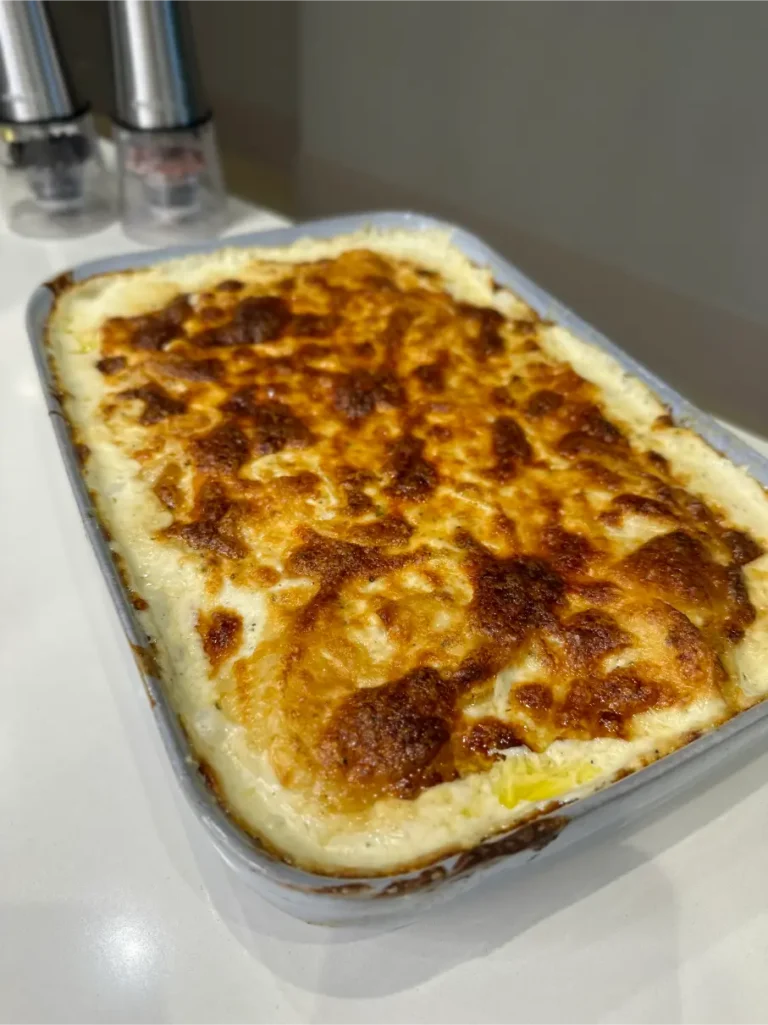
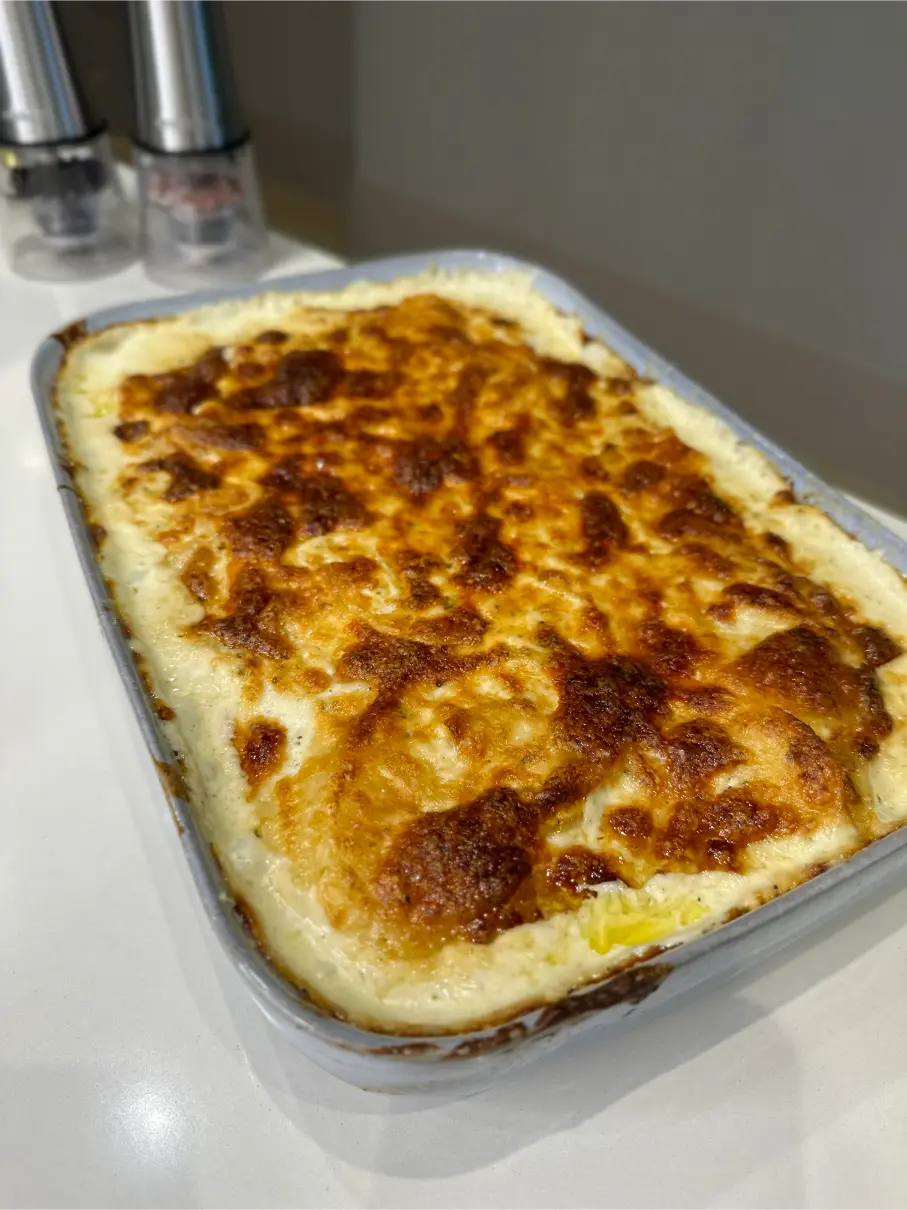
There are very few side dishes that command the same respect as a proper potato gratin. Not because it’s complicated, not because it’s flashy, but because when it’s done well, it quietly becomes the best thing on the table. Creamy, garlicky, softly set in the middle with golden, bubbling edges, this is comfort food at its most refined.
The Ultimate Potato Gratin
Potato gratin doesn’t shout. It doesn’t need to.
It arrives at the table gently bubbling, golden on top, rich with cream and garlic, and somehow manages to make everything else around it feel slightly less important. Meat becomes a supporting act. Vegetables play backup. Conversation pauses for a second while everyone takes their first bite.
That’s the power of a properly made gratin.
This version is unapologetically indulgent. Thinly sliced potatoes cooked in milk and cream, infused with onion, garlic, thyme, nutmeg, and parmesan, then baked until the top is golden and the inside is soft, rich, and spoonable. It’s not rushed, it’s not lightened, and it’s not pretending to be anything other than one of the greatest side dishes ever invented.
Why potato gratin never goes out of style
Some dishes come and go. Potato gratin never does.
That’s because it’s built on fundamentals that don’t age. Potatoes, dairy, seasoning, time. No trends. No gimmicks. Just good ingredients treated properly.
Gratin, or dauphinoise if you want to get technical, has been around for generations because it works. The starch from the potatoes thickens the cream naturally. The slow baking softens everything without boiling. The top browns, the inside stays tender, and the flavours deepen as it rests.
It’s simple food elevated by patience and restraint.
Choosing the right potatoes matters
Not all potatoes are created equal when it comes to gratin.
Maris Piper or King Edward are ideal because they sit in that perfect middle ground. They’re starchy enough to thicken the cream and create that soft, almost sliceable interior, but they still hold their shape. You want the layers to be defined, not mushy.
Waxy potatoes won’t give you the same luxurious texture, and overly floury ones can collapse. The right potato gives you structure and creaminess at the same time.
Why slicing thinly is non-negotiable
Thickness matters more than people realise.
Slices around 3mm thick cook evenly and allow the cream to penetrate properly. Too thick, and you end up with crunchy centres. Too thin, and everything can collapse into a uniform paste.
Using a sharp knife or mandoline makes a big difference here. Consistency means everything cooks at the same rate, which is crucial when you’re relying on gentle heat rather than aggressive boiling.
This is slow cooking by design.
Building flavour before the oven
One of the reasons this gratin tastes so rich is that the flavour is built before it ever goes into the oven.
Softening the onion first brings sweetness without browning. Garlic and thyme bloom gently in the oil, releasing aroma rather than sharpness. Adding the milk and cream to the pan allows those flavours to infuse the liquid before the potatoes even go in.
That step turns this from “potatoes baked in cream” into something far deeper and more cohesive.
The parmesan doesn’t just add salt, it adds umami. Nutmeg adds warmth and depth, not spice. Everything is layered quietly, intentionally.
Cooking the potatoes in the cream first is the cheat code
This is the move that separates a good gratin from a great one.
By adding the sliced potatoes directly into the cream mixture and simmering briefly, you achieve a few things at once. The potatoes start cooking immediately. The starch begins to release. The cream thickens slightly. And the slices separate instead of clumping.
When the gratin goes into the oven, you’re finishing it, not starting from scratch. That’s how you get that perfectly tender interior without overbaking the top.
It also makes the final bake more predictable, which is a gift when you’re cooking for people.
Cheese, used properly
This isn’t a cheese-heavy gratin in the sense of strings and pulls. Parmesan is there to deepen, not dominate.
It melts into the cream, adding savouriness and richness without turning the dish into a cheese bake. A little extra on top gives you that golden finish and sharp edge, but the potatoes and cream are still the stars.
This balance is important. You want indulgence, not overload.
The importance of resting
Once the gratin comes out of the oven, it needs a few minutes to settle.
This allows the cream to thicken slightly, the layers to hold together, and the flavours to calm down. Cutting into it immediately will give you something delicious but loose. Letting it rest gives you structure without sacrificing softness.
It’s worth the wait.
Why this dish steals the show
Potato gratin has a habit of overshadowing whatever it’s served with.
Roast chicken, beef, lamb, fish, it doesn’t matter. People remember the gratin. They ask about it. They go back for seconds. It’s the side dish that behaves like a main character.
That’s because it satisfies on a level that most sides don’t. It’s rich, comforting, familiar, and deeply pleasurable to eat.
You don’t need a large portion. A spoonful goes a long way.
When to serve it
This is not everyday food, and it shouldn’t pretend to be.
Potato gratin shines at:
It’s also an excellent make-ahead dish. Assemble it earlier in the day, bake when needed, and let it rest while you finish everything else.
It’s calm food. Reliable food.
Ingredients
1.5 kg potatoes (Maris Piper or King Edward)
1 onion, sliced
4 cloves of garlic, chopped
20 g fresh thyme, chopped
568 ml milk (1 pint)
600 ml double cream
80 g parmesan, plus extra for topping
¼ tsp nutmeg
1 tsp salt
1 tsp black pepper
How to make The Ultimate Potato Gratin
Preheat the oven to 170°C fan.
Heat some oil in a large pot over a medium-high heat. Add the sliced onion and cook for a few minutes until softened.
Add the garlic and chopped thyme and cook for another minute until fragrant.
Pour in the milk and double cream, then add the parmesan, nutmeg, salt, and black pepper. Stir well.
Slice the potatoes thinly, around 3mm thick. Add them to the pot and stir gently to separate the slices.
Bring the mixture to a simmer and cook until the cream thickens slightly.
Spoon the potatoes into an ovenproof dish, pouring over the remaining cream and leaving about a 1cm gap at the top.
Bake for around 45 minutes until golden and bubbling.
Leave to stand for a few minutes before serving.
How to serve it
Serve hot, spooned rather than sliced, alongside roasted meats or vegetables. A simple green salad on the side is more than enough to balance the richness.
FAQs
Is this dauphinoise or gratin?
Technically it leans towards gratin due to the cheese, but labels matter less than results.
Can I make it ahead of time?
Yes. Reheat gently in the oven before serving.
Can I freeze it?
It can be frozen, but the texture is best fresh.
Can I add other herbs?
Thyme works best, but bay or rosemary can be added subtly.
Why is my gratin watery?
The potatoes may not have been starchy enough or the cream wasn’t simmered first.
This is side dish royalty. Rich, comforting, and deeply satisfying, potato gratin doesn’t try to impress, it simply does. When it’s done properly, like this, it earns its place on the table every single time.