Cottage pie is one of those dishes that doesn’t need reinventing. It just needs doing properly. Rich beef mince cooked slowly in gravy, soft vegetables, and a thick, buttery, cheesy mash on top. No tricks, no shortcuts, just honest cooking that delivers every single time.
Cottage Pie
There are some dishes that feel stitched into British life. Cottage pie is one of them.
It’s the kind of food that turns up at family tables, school dinners, pubs, and Sunday leftovers. It’s the meal you cook when the weather turns cold, when you want something reliable, when you need comfort that doesn’t require explanation. Everyone knows what it is. Everyone has an opinion on how it should be done. And when it’s good, it’s really good.
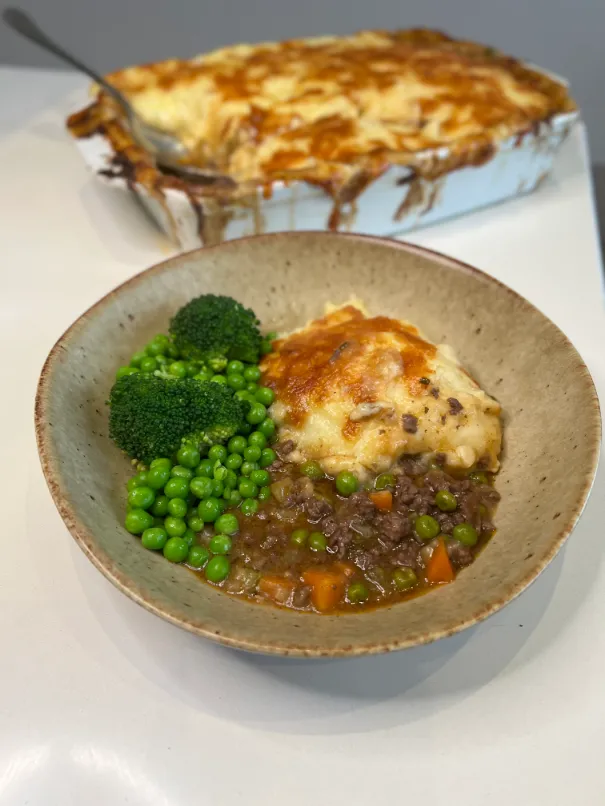
This version is exactly what cottage pie should be. Proper beef mince cooked slowly with vegetables, rosemary, red wine, and Worcestershire sauce until it’s rich and spoonable, topped with fluffy mashed potatoes enriched with butter, milk, nutmeg, and plenty of cheddar. It’s hearty, filling, deeply savoury, and unapologetically comforting.
This is not a lightened version. It’s not a “modern twist”. It’s cottage pie done right.
Why cottage pie still matters
Cottage pie has stuck around for a reason.
It’s economical. It feeds a crowd. It uses everyday ingredients. And when cooked with care, it delivers more satisfaction than dishes that take twice as long and cost twice as much.
It’s also forgiving. You don’t need perfect knife skills or specialist equipment. What you need is time, seasoning, and patience. Let the mince brown properly. Let the sauce thicken. Let the mash be generous.
Cottage pie rewards effort, not fuss.
Beef first, always
This is cottage pie, not shepherd’s pie. Beef is non-negotiable here.
Using lean minced beef gives you a rich base without excessive grease, but the key is browning it properly. High heat, no overcrowding, and time. You want colour. You want depth. You want the meat to develop flavour before anything else goes in.
Adding red wine at this stage does two things. It lifts the richness and helps deglaze the pan, pulling all that browned goodness back into the sauce. Reducing it by half cooks off the harshness and leaves behind richness rather than bitterness.
That step alone elevates the dish from basic mince and gravy to something far more satisfying.
The vegetable base is quiet but crucial
Onion, carrot, and celery don’t shout in cottage pie. They’re not supposed to.
They provide sweetness, body, and balance. Cooked gently, they melt into the sauce rather than sitting on top of it. That’s why they’re cooked separately at first. Softened slowly, not rushed, so they do their job properly.
Garlic and rosemary bring aroma and warmth. Bay leaves add depth that you don’t notice directly, but you would miss immediately if they weren’t there.
Everything here is about layering, not overpowering.
Flour and tomato purée, used properly
This is old-school technique, and it works.
Adding flour and tomato purée together and cooking them out creates a base that thickens naturally and carries flavour evenly. The flour removes the need for cornflour or instant thickeners later. The tomato purée adds richness without making the dish tomato-heavy.
Once the stock goes in, you’re building gravy, not sauce. It should be thick enough to coat a spoon, not run like soup.
That’s what holds the pie together.
Time does the heavy lifting
Cottage pie isn’t fast food, but it’s not complicated either.
That 45-minute simmer is where the transformation happens. The beef softens. The vegetables disappear into the sauce. The gravy thickens and deepens. Worcestershire sauce adds savoury punch and rounds everything out.
This is where patience pays off.
By the time the peas go in, the filling should be rich, glossy, and confident. It should taste like something you want to cover with mash.
Let’s talk about the mash
The topping matters just as much as what’s underneath.
Maris Piper potatoes are ideal. Fluffy, starchy, and perfect for mash that’s soft but not watery. Starting them in cold water ensures even cooking, and letting them steam dry after draining prevents a gluey texture.
Butter goes in first. Always. Then milk. Nutmeg adds warmth and depth without tasting like spice. And cheddar brings savouriness and richness that plain mash just doesn’t deliver.
This isn’t mash that politely sits on top. It’s mash that announces itself.
Cheese belongs here
There’s no rule that says cottage pie can’t have cheese. In fact, most people secretly prefer it that way.
Cheddar in the mash adds flavour throughout, while extra on top gives you that golden, bubbling crust. Combined with a few knobs of butter, it creates contrast between crisp edges and soft interior.
That contrast is everything.
Baking is the final act
Once assembled, the pie doesn’t need long in the oven. Everything is already cooked.
What you’re doing now is bringing it together. Heating it through. Letting the mash set slightly. Allowing the top to brown and the edges to bubble.
That golden finish is the signal that it’s ready.
Let it rest for a few minutes before serving. It’ll hold together better, and the flavours will settle.
Why this is proper comfort food
Cottage pie doesn’t try to impress.
It comforts. It fills. It warms. It’s the kind of food that makes people relax when they see it on the table. No explanations needed. No selling required.
It’s familiar in the best possible way.
This is the dish you cook for family. For friends. For yourself when you’ve had a long week and want something reliable. It’s generous, grounding, and deeply satisfying.
Ingredients
For the mince
800 g lean minced beef
1 large onion, diced
1 large carrot, diced
2 sticks celery, diced
1 bunch rosemary
4 cloves garlic, chopped
2 tbsp plain flour
1 tbsp tomato purée
175 ml red wine
400 ml beef stock
2 tbsp Worcestershire sauce
3 bay leaves
300 g frozen peas
For the topping
1 kg Maris Piper potatoes
400 g grated cheddar
100 g butter
1 tsp ground nutmeg
200 ml milk
How to make Cottage Pie
Over a high heat, add the minced beef to your largest frying pan and fry until browned all over, breaking it up as it cooks.
Pour in the red wine and reduce by half, then take it off the heat.
In a separate large pan, cook the onion, carrot, and celery over a medium heat until softened.
Add the garlic, rosemary, and bay leaves and cook for another minute.
Stir in the tomato purée and flour and cook for one minute.
Pour in the beef stock and Worcestershire sauce, then add the browned beef.
Cover and simmer over a low heat for 45 minutes.
Preheat the oven to 200°C.
Cook the potatoes in salted water until tender, drain, steam dry, then mash with butter, cheese, nutmeg, and milk.
Remove the lid from the mince if needed and reduce until thick. Stir in the peas and season.
Spoon the mince into an ovenproof dish, top with mash, then scatter over remaining butter and cheese.
Bake for 25–30 minutes until golden. Rest briefly before serving.
FAQs
Can I make this ahead of time?
Yes. Assemble, chill, and bake when needed.
Can I freeze cottage pie?
Absolutely. Freeze before baking for best results.
What’s the difference between cottage and shepherd’s pie?
Cottage pie uses beef. Shepherd’s pie uses lamb.
Do I need cheese on top?
No, but once you try it, you won’t skip it again.
What should I serve it with?
It doesn’t need much. Some greens on the side is perfect.
This is cottage pie as it should be. Rich, comforting, familiar, and deeply satisfying. No gimmicks. No shortcuts. Just proper British comfort food, done properly.



4 comments on “Cottage Pie”
Thank you Jon,
The recipe worked very well. For a busy family, we thoroughly enjoyed it.
The ingredients lists states 3 bay leaves, but the instructions never mention them. Do they go in at stage 7?
Hi, sorry about that. This is an early recipe that had to be transferred to my website. You can add the bay leaves along with the garlic and rosemary. Enjoy.
This was absolutely delicious !! So easy to make too!