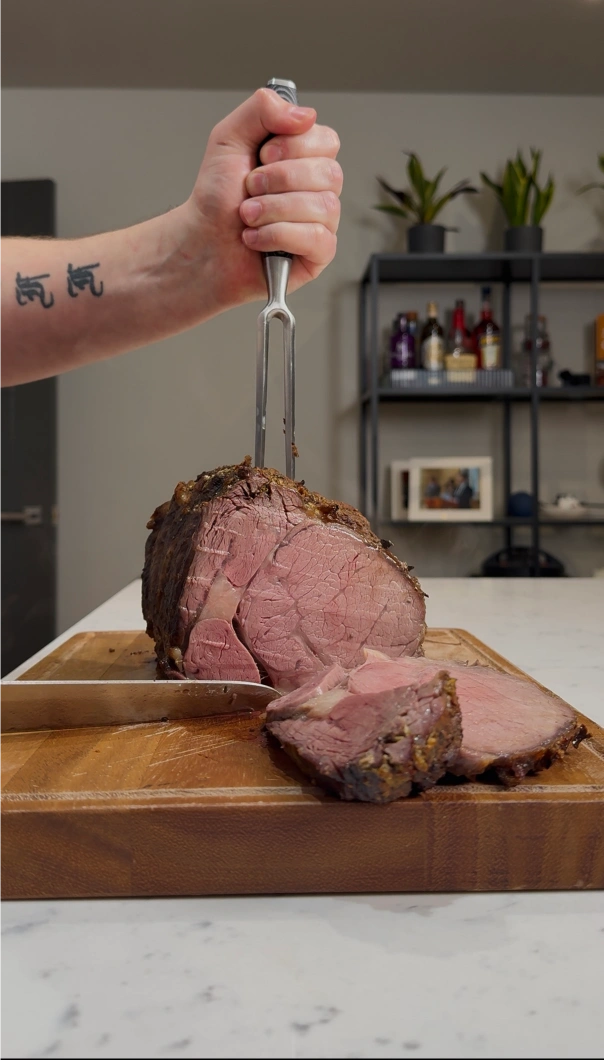
This is big energy cooking. The kind that makes a table go quiet in the best possible way. A proper roast rib of beef is not subtle, and it shouldn’t be. It’s dramatic, indulgent, and deeply satisfying, the sort of dish that announces itself before it even hits the table.
Slow-roasted until tender, blasted at the end for a savage crust, then carved thick and proud, this is roast beef done properly. No gimmicks, no marinades pretending to be clever, just excellent meat, correct seasoning, and confidence in the method. It’s simple, loud, and guaranteed to impress anyone lucky enough to be sitting down when it’s served.
This is not everyday cooking. This is “I planned this” cooking.
Roast Rib of Beef
This roast rib of beef is everything a centrepiece should be. Deeply seasoned, perfumed with garlic and herbs, cooked low and slow for tenderness, then finished at ferocious heat for a crust that crackles when the knife goes in. The meat stays blushing and juicy inside, with fat rendered just enough to baste it from the inside out.
Cooking the rib gently first gives you control and consistency. The final blast of heat delivers that dark, savoury crust without overcooking the centre. Resting does the rest of the work, letting the juices redistribute so every slice eats like it should.
This is roast beef without panic. Calm, deliberate, and absolutely worth the time.
Why rib of beef is king
Rib of beef sits in that sweet spot between flavour and tenderness. It’s well-marbled, rich without being greasy, and forgiving enough to handle long cooking without drying out.
The bone matters too. It insulates the meat, adds flavour, and gives you that undeniable visual impact when it hits the table. A bone-in rib doesn’t whisper luxury, it announces it.
Cooking it on the bone also makes carving easier. Slice the meat cleanly off the bones at the end, then carve into thick, generous portions. No fiddling, no hacking.
This is meat that wants to be respected, not overhandled.
Low and slow, then loud
The cooking method here is deliberate. Slow roasting at a low temperature gives you even doneness from edge to centre. No thick grey band. No overcooked ends. Just consistent pink meat all the way through.
The final high-heat blast is where the magic happens. That’s when the fat crisps, the seasoning blooms, and the outside turns dark, savoury, and irresistible.
It’s the best of both worlds, control and drama.
This is occasion food
You don’t make this by accident. This is Sunday lunch, birthday dinner, Christmas table, or “I want to show off a bit” cooking. It’s food that slows everyone down, makes them pay attention, and rewards patience.
That doesn’t mean it’s complicated. The hands-on time is minimal. Most of the work is done by the oven while you get on with life, pour drinks, or pretend you’re not checking the thermometer every ten minutes.
Equipment you’ll need
You’ll need a roasting dish with a rack so the beef sits elevated and cooks evenly. A meat thermometer is strongly recommended unless you enjoy living dangerously.
You’ll also need foil for resting, a sharp carving knife, and a solid board for slicing.
That’s it. No tricks, no gadgets pretending to be essential.
Ingredients
3 kg bone-in rib of beef
3 tbsp sea salt
1 tbsp black pepper
10 g rosemary, chopped
10 g thyme, chopped
2 garlic cloves, minced
2 tbsp Dijon mustard
That’s the whole list. When the meat is good, you don’t need much else.
How to make it
Place the rib of beef into a roasting dish set on a rack. Pat it dry if needed.
Salt the beef generously all over. Properly coat it. This is a big piece of meat and it can handle it. Crack the black pepper over every surface.
In a bowl, mix the Dijon mustard, chopped rosemary, chopped thyme, and minced garlic. Rub this mixture all over the beef, pressing it into the surface so it sticks.
Leave the beef at room temperature for about 30 minutes. This takes the chill off and helps it cook more evenly. If you want to keep the bones pristine, you can wrap each one in foil, but this is optional and purely aesthetic.
Preheat the oven to 120°C.
Place the beef on the middle shelf and roast until the internal temperature reaches 50°C. This usually takes between 2½ to 3 hours, depending on your oven and the shape of the joint. Use a thermometer and trust it.
Once the target temperature is reached, remove the beef from the oven and loosely tent it with foil. Let it rest for 30 minutes. This is not wasted time, this is where juiciness happens.
Turn the oven up to 260°C, or as high as it will safely go.
Return the beef to the oven and roast for a further 10 minutes until the outside is deeply browned and crisp.
Remove from the oven and let it stand for at least 5 minutes.
Slice the meat cleanly off the bones in one piece, then carve into thick slices. Serve immediately.
Doneness guide
50°C internal before the final blast gives you rare to medium-rare beef after resting and finishing.
If you prefer it slightly more done, take it to 52 to 54°C before resting.
Do not guess. Use a thermometer. This is not the time for vibes.
Tips for perfect roast beef
Season generously. Big joints need confidence.
Let the meat come to room temperature before cooking.
Always rest before and after the final blast. Both matter.
Carve across the grain for tenderness.
Sharp knife, calm energy. Rushing ruins the moment.
Make it your own
Add crushed peppercorns to the herb rub for extra bite.
Swap Dijon for wholegrain mustard for texture.
Add a little lemon zest to the herb mix for brightness.
Serve with horseradish cream, mustard, or a sharp gravy.
What to serve with it
Roast potatoes are non-negotiable.
Yorkshire puddings are strongly encouraged.
Proper gravy made from the roasting juices.
Something green, beans, cabbage, or greens in butter, to keep things balanced.
Leftover beef in sandwiches the next day is elite behaviour.
Storage and leftovers
Store leftovers tightly wrapped in the fridge for up to three days.
Eat cold with mustard, reheat gently, or slice thin for sandwiches.
Avoid microwaving thick slices, it toughens the meat.
Bones make an excellent base for stock if you’re feeling virtuous.
FAQs
Can I cook this without a thermometer?
You can, but you shouldn’t. This cut deserves precision.
Can I skip the final high-heat blast?
You can, but you’ll miss the crust. Don’t skip it.
Why rest twice?
The first rest protects the meat. The second settles it after the crust forms.
Is mustard essential?
No, but it helps the herbs stick and adds subtle depth.
Can I cook this ahead?
Not really. This is best served fresh and carved hot.
Final word
This roast rib of beef is unapologetically impressive. It’s simple, confident cooking that delivers exactly what it promises, juicy meat, savage crust, and silence at the table.
If you want to cook something that people remember, this is it.