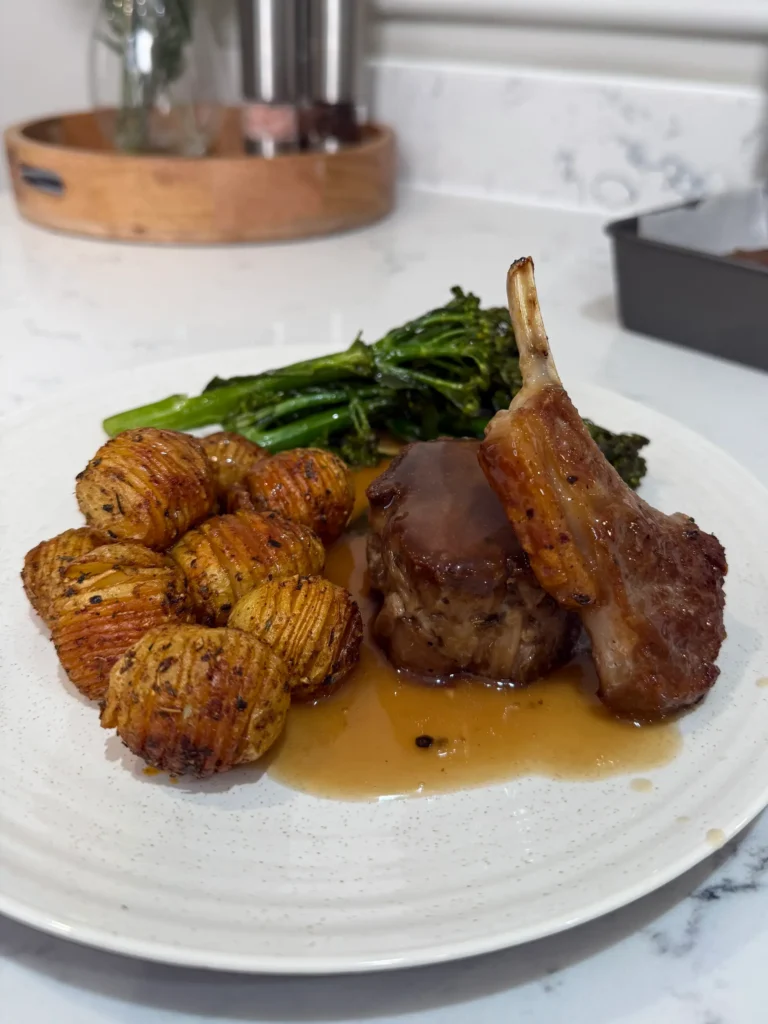
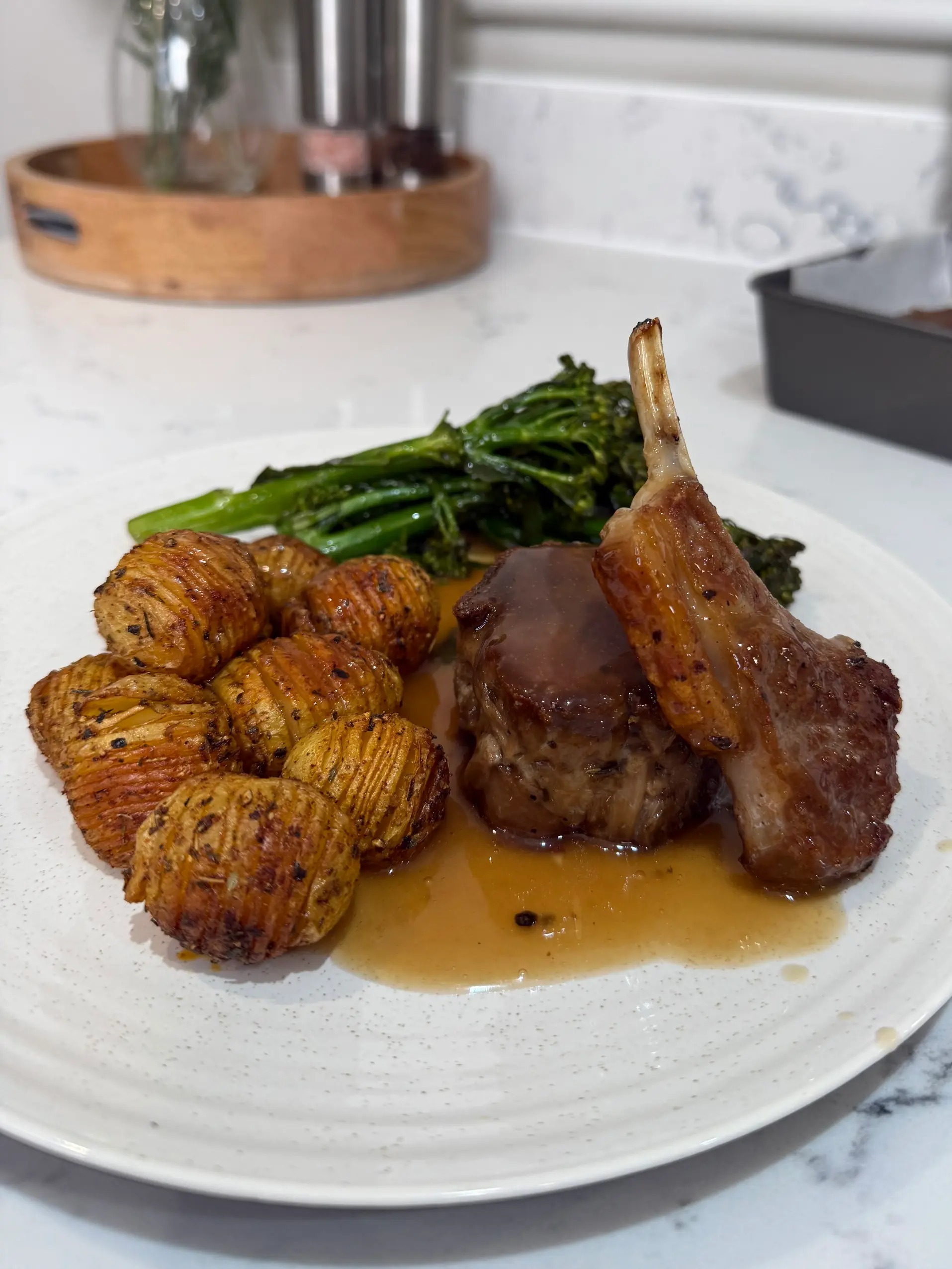
This is the kind of cooking that feels ceremonial. Big joint of lamb, low heat, long time, and a result that makes the whole house smell incredible for hours. Slow-roasted shoulder of lamb is rich, indulgent, and deeply comforting, the sort of dish that turns a meal into an event.
Cooked gently until it collapses, then pressed, chilled, sliced, and crisped back up, this is lamb cooked with intention. It’s not rushed. It’s not delicate. It’s bold, generous, and built to impress without being flashy. Serve it with potatoes, greens, and proper gravy, and you’ve got something that feels restaurant-level but deeply homely at the same time.
This is dinner party food that actually delivers.
Slow Roasted Shoulder of Lamb
This slow roasted shoulder of lamb is meltingly tender, deeply flavoured, and unapologetically indulgent. The lamb is roasted low and slow with rosemary and garlic until it falls off the bone, then pulled, pressed, and chilled so it can be sliced and crisped like a steak the next day.
The result is the best of both worlds. Soft, rich lamb on the inside with golden, caramelised edges on the outside. It eats beautifully, slices cleanly, and feels deliberate and polished when it hits the plate.
This isn’t just roast lamb. This is lamb done properly.
Why lamb shoulder is the correct cut
Lamb shoulder is built for this kind of cooking. It’s well-marbled, full of connective tissue, and thrives with long, gentle heat. Where lean cuts dry out, shoulder gets better and better the longer it cooks.
Given time, the fat renders, the collagen breaks down, and the meat turns spoon-soft and intensely flavourful. Bone-in shoulder adds even more depth, helping the meat cook evenly and infusing the roasting juices with richness.
This is not a cut you rush. Treat it patiently and it rewards you massively.
Low heat, long time, no stress
The beauty of this dish is how forgiving it is. Once it’s in the oven, tightly wrapped, it just gets on with the job. No basting, no turning, no panic.
The garlic and rosemary perfume the lamb gently rather than aggressively. The seasoning is simple but confident, letting the lamb speak for itself. By the time it comes out, the meat is so tender it practically pulls itself apart.
From there, you’ve got options. Serve it straight away, or take it one step further and turn it into something truly special.
The press-and-slice move
Pressing the lamb might sound like extra work, but this is where the dish levels up.
By pulling the lamb while warm, rolling it tightly, and chilling it overnight, you create structure. That structure lets you slice it into thick, steak-like portions that can be pan-fried for crisp edges without falling apart.
It’s a smart move for dinner parties. All the hard work is done ahead of time, and on the day you just slice, fry, and serve. Calm energy only.
Equipment you’ll need
You’ll need a large roasting dish, heavy-duty foil, a sharp knife, and some cling film.
For the next day, you’ll need a frying pan and an ovenproof tray to finish the lamb.
Nothing specialist, just solid kitchen kit.
Ingredients
2 kg lamb shoulder, bone in
25 g rosemary
3 bulbs garlic, cut in half
2 tbsp olive oil
2 tsp salt
2 tsp black pepper
2 tsp garlic granules
1 tsp onion granules
That’s it. Big joint, confident seasoning.
How to make it
Preheat the oven to 165°C.
Using a sharp knife, score the lamb shoulder in a deep criss-cross pattern. This helps the seasoning penetrate and encourages even cooking.
In a bowl, mix together the salt, black pepper, garlic granules, and onion granules.
Scatter the rosemary and halved garlic bulbs over the base of a large roasting dish. Place the lamb shoulder on top.
Rub the lamb all over with olive oil, then sprinkle the seasoning mix generously over every surface, pressing it into the cuts.
Cover the dish tightly with foil. You want a proper seal so no steam escapes.
Place the lamb in the oven and roast for 4 hours. Don’t be tempted to peek. Let it do its thing.
After 4 hours, remove the lamb from the oven. It should be falling off the bone. Discard the bones, garlic, and rosemary.
While the lamb is still warm, pull it apart into chunky pieces.
Lay several sheets of cling film on a work surface. Pile the lamb along the middle, forming a rough log shape. Roll it up tightly into a sausage shape, twisting the ends firmly to compress the meat.
Chill overnight until completely firm.
The next day, preheat the oven to hot, around 200°C.
Slice the chilled lamb roll into thick, fillet-style portions.
Heat a little oil in a frying pan over medium-high heat. Pan-fry each slice for 2 to 3 minutes per side until golden and crisp.
Transfer the slices to a hot oven for 6 to 8 minutes to heat through.
Serve immediately.
What perfect slow-roasted lamb should be like
The lamb should pull apart with no resistance.
The fat should be soft and buttery, not chewy.
After pan-frying, the outside should be crisp and golden while the inside stays juicy and rich.
If it’s dry, it was cooked too hot. If it’s tough, it wasn’t cooked long enough.
Tips for best results
Seal the foil tightly. Steam equals tenderness.
Season generously. Big joints can take it.
Pull the lamb while warm, it’s much easier.
Chill fully before slicing. Structure matters.
Don’t overcrowd the pan when frying the slices.
Serving ideas
Baby hasselback potatoes are perfect here.
Buttery greens or cabbage balance the richness.
Proper gravy is non-negotiable.
Pan-fried lamb cutlets on the side take it into full show-off territory.
Leftover lamb with gravy in a sandwich the next day is elite.
Storage and leftovers
The cooked lamb roll will keep in the fridge for up to three days before slicing.
Once sliced and cooked, leftovers will keep for two days.
Reheat gently to avoid drying out.
You can also freeze the pressed lamb before slicing. Defrost fully before cooking.
FAQs
Can I serve it straight from the oven without pressing?
Yes. It’ll be delicious, just less structured.
Do I have to chill it overnight?
Overnight is best, but a few hours will work in a pinch.
Can I use boneless shoulder?
Yes, but bone-in gives better flavour.
Is this suitable for a crowd?
Absolutely. It’s built for feeding people.
Why press it at all?
For cleaner slices, better texture, and easier serving.
Final word
This slow roasted shoulder of lamb is rich, comforting, and quietly impressive. It rewards patience, feeds a crowd, and turns a simple joint into something genuinely special.
If you want a dish that makes people feel looked after, this is the one.