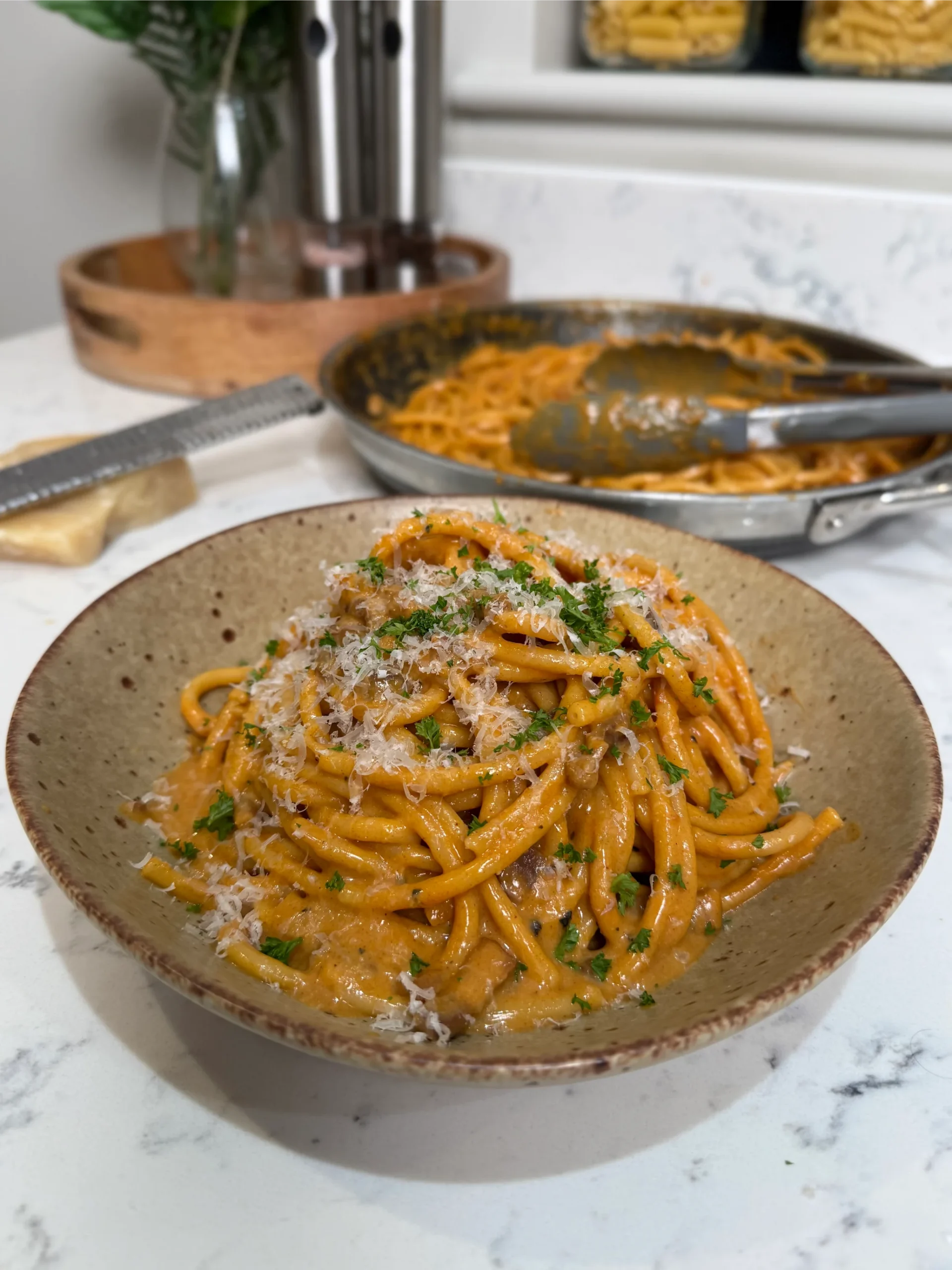
This is carbonara with intent. Still rooted in the classic, still respectful of what makes it great, but with an extra layer of heat, richness, and swagger thanks to ’nduja. It’s fast, indulgent, deeply savoury, and just spicy enough to wake everything up without turning it into a gimmick.
This is the kind of pasta you make when you want comfort but not boredom. Familiar enough to feel reassuring, bold enough to feel exciting. It comes together in minutes, uses simple ingredients, and delivers that silky, glossy sauce that coats every strand properly. No cream, no shortcuts, just technique and confidence.
The Ultimate Carbonara with ’Nduja
This carbonara with ’nduja stays true to the soul of the original while leaning into deeper, richer flavours. Crisp pancetta provides salt and texture, ’nduja melts into the fat bringing heat and smokiness, and a classic egg and cheese mixture turns it all into a luxurious, velvety sauce. The result is indulgent, punchy, and completely addictive.
The sauce clings rather than pools. The pasta stays glossy rather than greasy. The heat builds gently, warming rather than overwhelming. It’s everything carbonara should be, with a little extra muscle.
This is not a reinvention. It’s a smart evolution.
Why ’nduja belongs in carbonara
’Nduja works here because it behaves like pancetta’s louder cousin. It melts rather than crisps, releasing spicy, porky fat that blends seamlessly into the sauce. Instead of fighting the carbonara, it reinforces it.
The key is balance. You’re not replacing pancetta, you’re supporting it. The pancetta gives you bite and crunch. The ’nduja gives you depth, warmth, and richness. Together, they create a base that’s far more complex than either alone.
The cheese and egg mixture softens the heat, turning what could be aggressive into something rounded and luxurious. Every bite feels rich but controlled.
Carbonara is technique, not ingredients
Carbonara lives and dies by method. The ingredient list is short, but the timing matters.
Undercooked pasta, starchy water, residual heat, and constant movement are what turn eggs and cheese into a sauce rather than scrambled disappointment. This version follows the same rules as the classic, just with more flavour baked in.
If you’ve ever been scared of carbonara, this is your sign to stop being dramatic and trust the process. It’s easier than people pretend, you just need to pay attention for the final minute.
Fast food, done properly
This dish is on the table in about 20 minutes, which makes how good it tastes borderline unfair. It’s perfect for weeknights, late dinners, or those moments when you want something indulgent without committing to a full production.
It’s also ideal for cooking for someone else. It feels special, tastes impressive, and doesn’t leave you stuck in the kitchen all night. Just make sure everything is ready before you start, because once the pasta is cooked, things move quickly.
Equipment you’ll need
You’ll need a large pot for the pasta, a wide frying pan for the pancetta and ’nduja, a small bowl for mixing the eggs and cheese, and tongs for tossing everything together.
A ladle for pasta water helps. A whisk is optional, a fork works just fine.
That’s it. No blender. No oven. No nonsense.
Ingredients
250 g pasta, bucatini works beautifully
150 g pancetta, diced
50 g ’nduja
40 g parmesan, grated
40 g pecorino, grated
1 large egg
2 egg yolks
½ tsp black pepper
Salt, for the pasta water
Short list, serious flavour.
How to make it
Bring a large pot of well-salted water to the boil. Cook the pasta for 2 minutes less than the packet instructions. You want it properly al dente. Before draining, scoop out a mug of the pasta water and set it aside. Drain the pasta.
While the pasta cooks, make the egg mixture. In a small bowl, combine the parmesan, pecorino, whole egg, egg yolks, and black pepper. Mix with a fork until you’ve got a thick, smooth paste. Set aside.
Heat a large frying pan over medium-high heat. Add the diced pancetta and cook for about 5 minutes until golden and crisp, with plenty of fat rendered out.
Add the ’nduja to the pan and stir for about a minute until it melts completely and coats the pancetta. The pan should smell incredible at this point.
Add a ladle of the reserved pasta water to the pan and stir to loosen everything slightly. Turn the heat off completely. This is important.
Add the cooked pasta to the pan and toss it through the pancetta and ’nduja so everything is evenly coated.
Now add the egg and cheese mixture. Using tongs, toss continuously, moving the pasta and sauce around so the residual heat gently cooks the eggs into a silky sauce. Do not stop moving it.
If the sauce looks too thick, add a splash more pasta water and keep tossing until it turns glossy and coats the pasta beautifully.
Taste and adjust seasoning if needed. Serve immediately with extra cheese and a generous grind of black pepper.
What perfect carbonara should look like
The sauce should be glossy, not thick or claggy.
It should coat the pasta rather than sit at the bottom.
There should be no visible scrambled egg.
If it looks dry, add pasta water. If it looks loose, keep tossing. Trust your eyes.
Tips for getting it right every time
Undercook the pasta. Overcooked pasta ruins everything.
Turn the heat off before adding the eggs. Residual heat is enough.
Use pasta water gradually. It’s easier to add than fix.
Grate your own cheese. Pre-grated cheese does not melt properly.
Have everything ready before you start. Carbonara waits for no one.
Make it your own
Use spaghetti, rigatoni, or linguine if you don’t have bucatini.
Add extra black pepper if you like it punchy.
Dial up or down the ’nduja depending on how spicy you like things.
Finish with a drizzle of olive oil if you want extra richness.
A squeeze of lemon at the end is controversial but works if you like brightness.
What to serve it with
Honestly, nothing. This is a complete dish.
If you insist, a simple green salad with sharp dressing works.
Garlic bread is unnecessary and slightly distracting.
Wine is encouraged.
Storage and leftovers
This is best eaten immediately. Carbonara does not improve with time.
Leftovers can be reheated gently with extra pasta water, but it won’t be the same.
If you’ve got leftovers, you probably cooked too much pasta.
FAQs
Is this authentic carbonara?
It’s close, but ’nduja makes it a variation. A very good one.
Can I add cream?
No. You don’t need it.
Can I use bacon instead of pancetta?
You can, but pancetta is better. Less water, more flavour.
Is ’nduja very spicy?
It’s warm rather than fiery. Adjust to taste.
Can I make it for more people?
Yes. Scale everything evenly and work quickly.
Final word
This carbonara with ’nduja is rich, punchy, and deeply satisfying. It keeps everything that makes the classic great and adds just enough heat to make it feel exciting.
Fast, indulgent, and absolutely worth mastering, this is carbonara that doesn’t mess about.