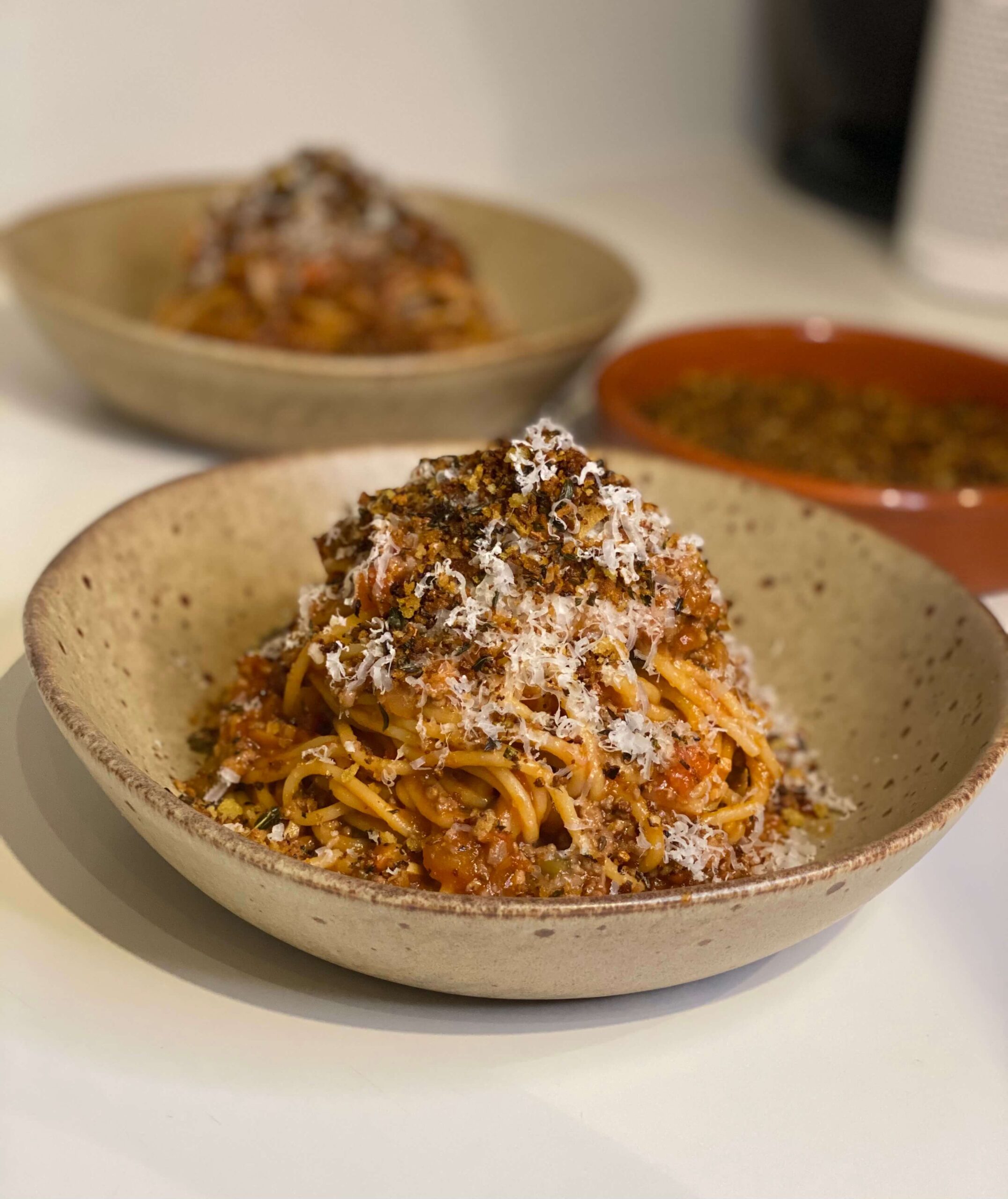
This is not a quick spag bol. It’s not a “bung it all in and hope for the best” situation. This is the kind of spaghetti bolognese you make when you want it to be genuinely good. Deep, rich, slow-cooked, and finished with something that changes the whole experience. Pangrattato. Crunchy, herby breadcrumbs that turn a familiar bowl of pasta into something special.
The Ultimate Spaghetti Bolognese
Everyone thinks they already have a spaghetti bolognese recipe they’re happy with. It’s one of those dishes people feel oddly protective over. Family versions, handed-down versions, “my mum’s way”, “the way I’ve always done it”.
But every now and then, a version comes along that makes you stop and reassess what spag bol can actually be.
This is that version.
This is a slow-cooked, deeply savoury ragu made with beef and pork, softened vegetables, wine, herbs, and time. Proper time. And then, right at the end, it’s finished with something that shouldn’t work but absolutely does. Pangrattato. Crisp, golden, herby breadcrumbs, often called poor man’s parmesan, scattered over the top for texture, flavour, and contrast.
Once you’ve tried it like this, it’s very hard to go back.
Why this bolognese works so well
The strength of this recipe is restraint.
There’s no sugar. No shortcuts. No jarred sauce pretending to be something it isn’t. Just good ingredients, cooked properly, in the right order, and given enough time to do their thing.
Using both minced beef and pork is a big part of that. Beef brings richness and depth, pork brings sweetness and fat. Together, they create a ragu that’s fuller and rounder than either would be on its own.
The vegetables aren’t rushed either. Onion, carrot, and celery form the base, gently cooked until soft so they melt into the sauce rather than sitting on top of it. Rosemary and bay give structure and aroma, not dominance. Garlic is present but controlled.
Everything is balanced.
Browning the meat properly matters
This is where a lot of bolognese recipes fall down.
The meat needs to brown. Properly. That means high heat, patience, and letting the liquid cook off before moving on. If the mince steams instead of browns, you miss out on depth. You miss out on that savoury backbone that makes a ragu taste rich rather than flat.
Once the meat is browned and the pan is dry, everything else builds on a solid foundation.
That’s why this sauce tastes like it’s been cooked with intention, not just assembled.
Wine isn’t optional here
Red wine isn’t just for deglazing.
It lifts the sauce, adds acidity, and brings complexity that water or stock alone can’t replace. Reducing it by half concentrates those flavours and cooks off the harshness, leaving behind richness rather than bitterness.
When the stock goes in afterwards, it rounds everything out instead of thinning it.
This step is quiet but crucial.
Tomatoes are there to support, not dominate
This isn’t a tomato sauce with meat in it.
The tomatoes add body and sweetness, but they don’t overwhelm the meat. Two tins are enough to coat everything and bring balance, without turning it into something sharp or acidic.
Simmering low and slow allows the tomatoes to mellow and integrate fully into the sauce. After 90 minutes, nothing tastes separate anymore. It’s just one cohesive, deeply savoury ragu.
Time is the main ingredient
This is a sauce that needs time.
Ninety minutes is where it really comes into its own. The meat softens. The fat emulsifies into the sauce. The flavours deepen and round off. What you end up with is thick, rich, spoon-coating ragu that clings to pasta instead of sliding off it.
It’s the kind of sauce you taste halfway through and immediately know it’s going to be good.
Pangrattato, the game changer
Now for the bit that changes everything.
Pangrattato is simply breadcrumbs fried with olive oil, garlic, and herbs until golden and crunchy. Traditionally used in Italian cooking when cheese was scarce, it earned the nickname poor man’s parmesan. But honestly, that undersells it.
What pangrattato brings is texture.
That crunch against soft pasta and rich sauce transforms the eating experience. It adds savouriness, aroma, and contrast. It makes every bite more interesting. It also stops the dish from feeling heavy, because your mouth isn’t dealing with one soft texture the whole time.
Once you’ve added pangrattato to pasta, especially rich pasta, it’s hard to understand why it isn’t more common.
It elevates the dish without complicating it.
Why this is the ultimate version
This bolognese doesn’t rely on gimmicks.
It’s built on technique, balance, and patience. It respects the dish rather than trying to reinvent it for the sake of it. And the pangrattato doesn’t steal the show, it finishes it.
That’s what makes this version stick.
It’s comforting, familiar, and deeply satisfying, but with enough refinement to make it feel special. The kind of meal that fills the house with smell, slows everyone down, and makes people linger at the table a bit longer than usual.
Ingredients
Bolognese
400 g minced beef
200 g minced pork
1 large onion, diced
2 carrots, diced
2 celery sticks, diced
4 tsp chopped garlic
1 bunch of rosemary, chopped
3 bay leaves
180 ml red wine
200 ml beef stock
2 tbsp tomato purée
2 x 400 g tins chopped tomatoes
600 g fresh spaghetti or 300 g dried
Parmesan, to finish
Pangrattato
100 g fresh breadcrumbs
1 bunch fresh rosemary
1 bunch fresh thyme
2 tsp chopped garlic
2 tbsp olive oil
How to make The Ultimate Spaghetti Bolognese
Add the minced beef and pork to a large pan and cook over a high heat, breaking it up until browned and all liquid has evaporated.
Add the onion, carrot, and celery. Cook for a few minutes until softened, then add the rosemary, bay leaves, and garlic. Cook for another minute.
Pour in the red wine and reduce by half, then add the beef stock.
Stir in the tomato purée and chopped tomatoes. Reduce the heat and simmer gently for around 90 minutes until rich and thick. Season to taste.
While the sauce cooks, make the pangrattato. Heat the olive oil in a pan, add the rosemary and garlic, cook briefly, then add the breadcrumbs.
Fry over high heat, stirring constantly, until golden and crunchy. Set aside.
Cook the pasta in salted boiling water until al dente.
Toss the pasta with the ragu and a little pasta water.
Serve with grated parmesan and a generous scattering of pangrattato.
How to serve it
This doesn’t need much. A big bowl, plenty of sauce, and the crunch of pangrattato on top. Garlic bread is optional. Silence at the table is expected.
FAQs
Why use both beef and pork?
The combination gives depth, richness, and balance that beef alone can’t.
Can I make this ahead of time?
Yes. It tastes even better the next day.
Is pangrattato essential?
Once you try it, yes. It transforms the dish.
Can I freeze the sauce?
Absolutely. It freezes beautifully.
Can I use dried herbs instead?
Fresh is best for pangrattato, but dried can work in the ragu.
This is spaghetti bolognese done properly. Slow, rich, comforting, and finished with crunch. Familiar enough to feel like home, elevated enough to feel special. And once pangrattato enters your life, it tends to stay there.




9 comments on “The Ultimate Spaghetti Bolognese”
Genuinely the best spag bol ever. And the pangrattato is a game changer
Another great recipe. I didn’t make the pangrattato as I forgot the breadcrumbs but the dish was tasty enough without this. I don’t usually like spaghetti bolognese but I enjoyed this!
Best spag bol recipe I’ve tried and will always be my go to now! Totally foolproof – you can’t go wrong. Thanks Jon.
I’ve tried so many spag bol recipes and this is the only recipe I’ll use now, it really is a game changer!!
Whenever I make Spaghetti Bolognese THIS is the recipe I go to. Used it so many times pretty sure I know it off by heart now!
This is the only was I make spag Bol now and the crunchy topping always works! I’m so pleased I found Jon’s recipes as they are easy and 100% always work. This is my go to website when I don’t know what to cook!
Just when you think you’ve got the best spag bol recipe – i tried this one and its now a firm fave!
This was the BEST spaghetti bolognese I’ve ever made! The pangrattato was absolutely amazing sooo delicious!! 100% recommend!
Must try! Our family favourite! This recipe takes spaghetti bolognaise to a whole new level