

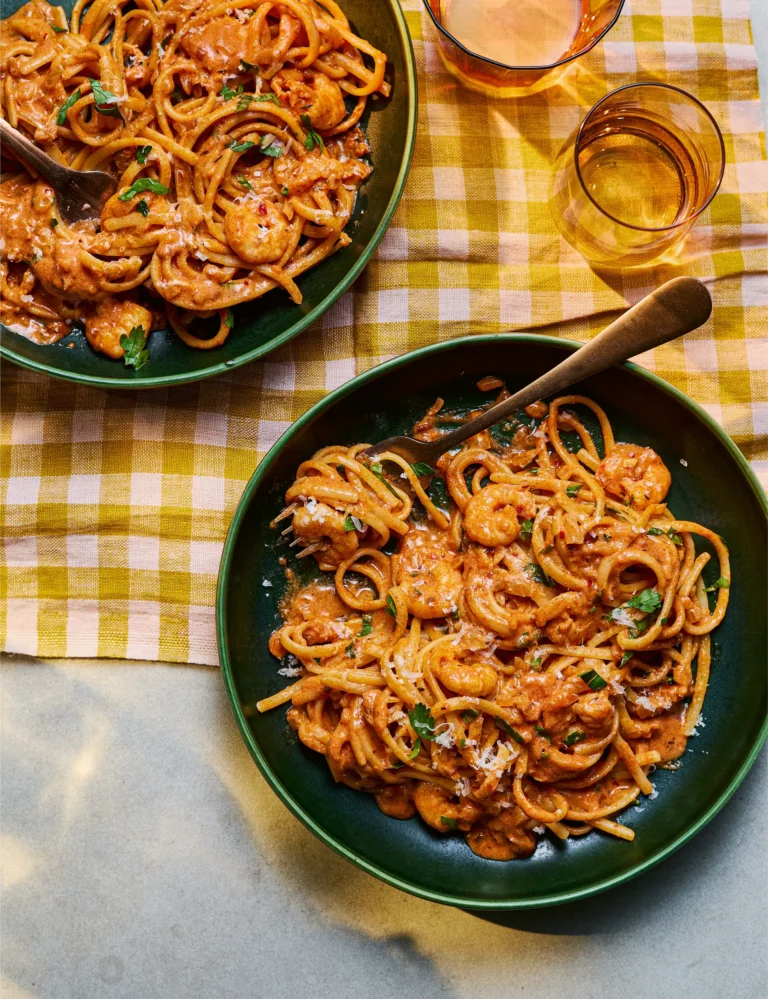
Cajun Prawn Pasta
This Cajun Prawn Pasta is creamy, spicy, packed with flavour and ready in just 20 minutes – but there’s something slightly different about this one.
It’s from my latest cookbook, Speedy Healthy, and it’s a good example of what I wanted to do with the book: take the sort of recipes that both I and you already love and create lighter options without turning dinner into something boring.
Because healthy eating doesn’t have to mean dry chicken breast and broccoli every night.
This pasta still gives you that creamy, comforting sauce you want from a Cajun pasta, but rather than loads of double cream, I’ve used vegetable stock and a relatively small amount of low-fat cream cheese. You still get Parmesan at the end, plenty of Cajun flavour and juicy king prawns, but the finished dish comes in at 531 calories, with 36g protein and 7g fibre. Cajun Prawn Pasta
And importantly, it still feels like a proper bowl of pasta.
Speedy Healthy is available to pre-order now and will be published on 31st December 2026. Cajun Prawn Pasta
A lighter creamy Cajun pasta
Creamy pasta has a bit of a reputation for being heavy.
And sometimes that’s exactly what I want.
But the whole point of this recipe was seeing whether I could get that creamy texture and big flavour while making something that works when you’re trying to eat a little lighter.
The answer is yes.
There’s only 40g of low-fat cream cheese in the entire recipe. Cajun Prawn Pasta
Instead of relying on loads of cream, we’re using vegetable stock, cream cheese and – importantly – starchy pasta water to create the sauce.
That gives you something glossy and creamy enough to coat the linguine without needing to drown it in cream.
Why prawns are brilliant for quick dinners
King prawns are one of my favourite ingredients when I want something genuinely quick.
They take minutes to cook.
They’re naturally high in protein.
And because they have quite a delicate flavour, they’re brilliant at taking on whatever seasoning you put around them.
Here that’s Cajun spice.
The prawns only need around two minutes in the pan before the stock goes in, so the entire sauce can be made while your linguine is cooking. Cajun Prawn Pasta
That’s how this becomes a genuine 20-minute dinner rather than a recipe that claims to take 20 minutes before quietly asking you to spend another half hour chopping everything.
What is Cajun seasoning?
Cajun seasoning is a spice blend inspired by Cajun cooking from Louisiana.
The exact ingredients vary between brands, but you’ll normally find some combination of paprika, garlic, onion, black pepper, cayenne and dried herbs.
That’s what makes it such a useful shortcut.
Rather than reaching for six different spice jars, one tablespoon brings loads of flavour to the whole sauce.
Different Cajun seasoning blends vary quite a lot in both salt and heat, though.
Some are relatively mild, while others contain plenty of cayenne.
Taste yours and adjust accordingly, particularly before adding extra salt to the finished pasta.
Don’t rush the onions
There aren’t loads of ingredients in this sauce, which means the simple steps matter.
Give the diced onion around five minutes over a medium-high heat.
You want it properly softened rather than still tasting raw.
As onion cooks, its flavour becomes sweeter and more rounded, which gives you a much better base for the Cajun spice and tomato.
Five minutes isn’t long, but don’t be tempted to chuck everything into the pan at once.
Cook the tomato purée and Cajun spice
Once the onion has softened, add the tomato purée and Cajun seasoning with the prawns.
The tomato purée gives the sauce colour, acidity and depth.
Giving it some direct heat in the pan also helps take away that raw tomato flavour.
Meanwhile, the heat wakes up the spices and helps release their aromatic flavours.
You should notice the whole pan becoming really fragrant pretty quickly.
Be careful not to overcook the prawns
Raw king prawns cook incredibly quickly.
They go from grey and translucent to pink and opaque in just a couple of minutes.
That’s what you’re looking for.
Remember that they remain in the pan while you add the stock and cream cheese, so there’s no need to completely hammer them during the first stage.
Overcooked prawns become firm and rubbery.
And there’s no sauce creamy enough to rescue a rubbery prawn.
How to make creamy pasta without double cream
This is probably the most useful part of the recipe.
Instead of pouring in a load of double cream, we’re using 175ml vegetable stock and 40g low-fat cream cheese. Cajun Prawn Pasta
The stock provides the liquid and savoury flavour.
The cream cheese brings richness and creaminess.
Then the pasta provides the final part of the equation.
As linguine cooks, it releases starch into the cooking water. Saving some of that water gives you an ingredient that helps emulsify and thicken the sauce.
Once everything gets tossed together, you end up with something that feels much richer than the ingredient list suggests.
Always save some pasta water
Before draining the linguine, scoop out some of the cooking water.
Do this even if you don’t think you’ll need it.
You can always throw it away afterwards.
You can’t climb down the sink and get it back.
The pasta water is particularly useful here because we’re deliberately using less fat than you’d find in a traditional creamy pasta sauce.
If the finished sauce looks slightly thick, add pasta water a splash at a time while tossing everything together.
The starch helps the sauce cling to the linguine rather than making it watery.
What if my Cajun pasta sauce is too watery?
Keep tossing.
This recipe actually uses the starch from the pasta to help create the final consistency.
Once the cooked linguine goes into the sauce, toss everything together over the heat.
If it looks too thick, add some reserved pasta water.
If it looks too loose, keep stirring and tossing for another minute. The starch from the pasta will help the sauce thicken and cling to the linguine. Cajun Prawn Pasta
Don’t judge the sauce before the pasta goes in.
It all comes together at the end.
Why linguine works so well
Linguine is brilliant for this because the long, slightly flat strands give the creamy sauce plenty of surface area to cling to.
But there’s no reason to buy linguine specifically if you’ve already got pasta in the cupboard.
Spaghetti works.
Tagliatelle would be lovely.
Penne or rigatoni would work too.
The sauce is thick enough to work with most pasta shapes.
Just stick to roughly the same dried pasta weight if you want the nutritional values to remain similar.
Parmesan is still invited
Making something lighter doesn’t mean removing every ingredient that tastes good.
There’s 20g Parmesan in this recipe, plus a little more for serving. Cajun Prawn Pasta
Parmesan has a really concentrated savoury flavour, which means a relatively small amount makes a noticeable difference.
That’s exactly the sort of ingredient I want when making lighter food.
Rather than removing cheese completely, use a smaller amount of something with loads of flavour.
36g of protein per serving
One of the things I wanted from Speedy Healthy was food that was actually satisfying.
This recipe contains 36g protein per serving, largely thanks to the king prawns, with additional protein coming from the pasta, cream cheese and Parmesan. Cajun Prawn Pasta
Protein isn’t just something for people spending their entire life in the gym.
Including a decent protein source can help make meals more filling, which is particularly useful when you’re trying to eat in a way that feels sustainable rather than spending the entire afternoon thinking about your next snack.
A 531-calorie pasta dinner that still feels indulgent
At 531 calories per serving, this is exactly the sort of recipe I wanted in the book. Cajun Prawn Pasta
It’s not a tiny portion of pasta with three prawns sitting sadly on top.
It’s a proper dinner.
You’ve got linguine, prawns, creamy sauce, Parmesan and loads of Cajun flavour.
For me, that’s far more appealing than trying to eat “diet food” for a week before inevitably getting bored of it.
How to add more vegetables
You can easily bulk this out with vegetables.
Spinach is probably the simplest. Throw a couple of handfuls into the sauce towards the end and let it wilt.
Peppers work brilliantly with Cajun flavours too. Finely slice one and cook it alongside the onion.
Courgette would work, as would Tenderstem broccoli.
If you’re specifically following the nutritional information from the book, remember that adding or changing ingredients will obviously alter the final numbers.
Can I make it spicier?
Definitely.
The amount of heat you get from one tablespoon of Cajun seasoning depends heavily on the brand.
If yours is mild and you want more heat, add some cayenne pepper or chilli flakes.
You could also finish the pasta with sliced fresh chilli.
If you’re cooking for people with different spice tolerances, I’d keep the main sauce relatively moderate and put chilli flakes on the table.
Making this recipe in the US
There are only a handful of ingredient translations needed for American readers.
180g dried linguine is approximately 6½ oz dried linguine.
200g raw king prawns is approximately 7 oz raw large or jumbo shrimp. What we normally call king prawns in the UK will generally be labelled large or jumbo shrimp in the US.
175ml vegetable stock is approximately ¾ cup vegetable broth or vegetable stock.
40g low-fat cream cheese is approximately 1½ oz reduced-fat cream cheese.
20g Parmesan is approximately ¾ oz finely grated Parmesan, plus extra for serving.
10g parsley is roughly ¼ cup chopped fresh parsley.
British tomato purée is called tomato paste in the US. This is important because American tomato purée is a different, thinner product. For this recipe, you want 1 tablespoon tomato paste.
Cajun seasoning is widely available in the US and can vary considerably between brands, particularly in salt and cayenne content, so season the finished dish to taste.
So if you’re in America looking for a healthy creamy Cajun shrimp pasta, this is the same recipe – we’re just calling them prawns over here.
Ingredients
180g dried linguine
1 onion, diced
1 tbsp tomato purée
1 tbsp Cajun spice
200g raw king prawns
175ml vegetable stock
40g low-fat cream cheese
20g Parmesan, grated, plus more to serve
10g parsley, chopped
Method
Cook the pasta in salted boiling water according to the packet instructions.
Meanwhile, heat a little oil in a large frying pan over a medium-high heat. Add the onion and cook for around 5 minutes, or until softened.
Add the tomato purée, Cajun spice and prawns. Cook for another 2 minutes, stirring occasionally, until the prawns are pink.
Pour in the vegetable stock and add the cream cheese. Stir well and bring everything to a simmer.
Before draining the pasta, reserve some of the cooking water. Add the drained pasta and parsley to the sauce and toss everything together until creamy. If it needs loosening, add a splash of reserved pasta water. If it’s too watery, keep stirring and the starch from the pasta will help thicken it. Taste and adjust the seasoning if needed.
Dish it up and finish with the grated Parmesan.
Equipment
Large saucepan
Large frying pan
Colander or pasta tongs
Sharp knife
Chopping board
Wooden spoon or spatula
Measuring jug
Fine cheese grater
FAQs
Is Cajun Prawn Pasta healthy?
This particular recipe was created for my Speedy Healthy cookbook as a lighter take on creamy pasta. According to the recipe’s nutritional information, each serving contains 531 calories, 36g protein and 7g fibre. Cajun Prawn Pasta
Can I make creamy Cajun pasta without cream?
Yes. This recipe uses vegetable stock and low-fat cream cheese rather than double cream. Starchy pasta water then helps everything come together into a creamy sauce.
What are king prawns called in America?
They’re generally sold as large or jumbo shrimp. For this recipe, look for raw, peeled shrimp rather than pre-cooked ones.
What is tomato purée called in America?
British tomato purée is called tomato paste in the US. Don’t use American tomato purée as a direct substitute because it’s considerably thinner.
Can I use cooked prawns instead of raw prawns?
Yes, but add them later. Pre-cooked prawns only need reheating, so adding them at the same stage as raw prawns could make them rubbery.
Can I use frozen prawns?
Yes. Defrost them completely first and pat away any excess moisture before adding them to the pan.
Can I use chicken instead of prawns?
Yes, although you’ll need to adjust the cooking time. Cut chicken breast into small pieces, brown it until cooked through and then continue with the sauce.
Can I use normal cream cheese?
Absolutely. Full-fat cream cheese will give you an even richer sauce. Just bear in mind that it’ll change the nutritional values given for the original recipe.
What can I use instead of Cajun seasoning?
You can make a simple version yourself using paprika, garlic granules, onion granules, cayenne, black pepper and dried herbs such as oregano or thyme.
Why isn’t my sauce creamy?
Make sure the cream cheese is completely incorporated into the stock, then toss the cooked pasta through the sauce thoroughly. The starch on the pasta and in the reserved pasta water helps everything emulsify into a creamier consistency.
Can I make Cajun Prawn Pasta ahead of time?
You can keep leftovers, but this is definitely best freshly cooked. Prawns can become rubbery when repeatedly reheated and the pasta will continue absorbing the sauce as it sits.
How can I make this higher in protein?
You could increase the amount of prawns, although that will change the nutritional values from the original Speedy Healthy recipe.
From Speedy Healthy
This Cajun Prawn Pasta is one of the recipes from my latest cookbook, Speedy Healthy.
The idea behind the book was simple: food can be lower calorie, higher protein or higher fibre without dinner becoming boring.
This recipe sums that up pretty well.
It’s creamy pasta.
It’s got Parmesan.
It’s spicy.
And it’s ready in 20 minutes.
The book is available to pre-order now and is published on 31st December 2026. Cajun Prawn Pasta
Final thoughts
This is exactly the sort of recipe I wanted Speedy Healthy to be about.
Rather than completely reinventing the way we eat, I’ve taken the sort of food people already love and looked at where simple changes can make it lighter while keeping the bits that actually make you want to eat it.
Here, swapping a traditional cream-heavy sauce for stock, low-fat cream cheese and pasta water still gives you that creamy finish, while king prawns provide plenty of protein and Cajun seasoning brings loads of flavour.
And you can get the whole thing on the table in 20 minutes.
For 531 calories, 36g protein and 7g fibre, I’ll happily take a massive bowl of creamy Cajun pasta.
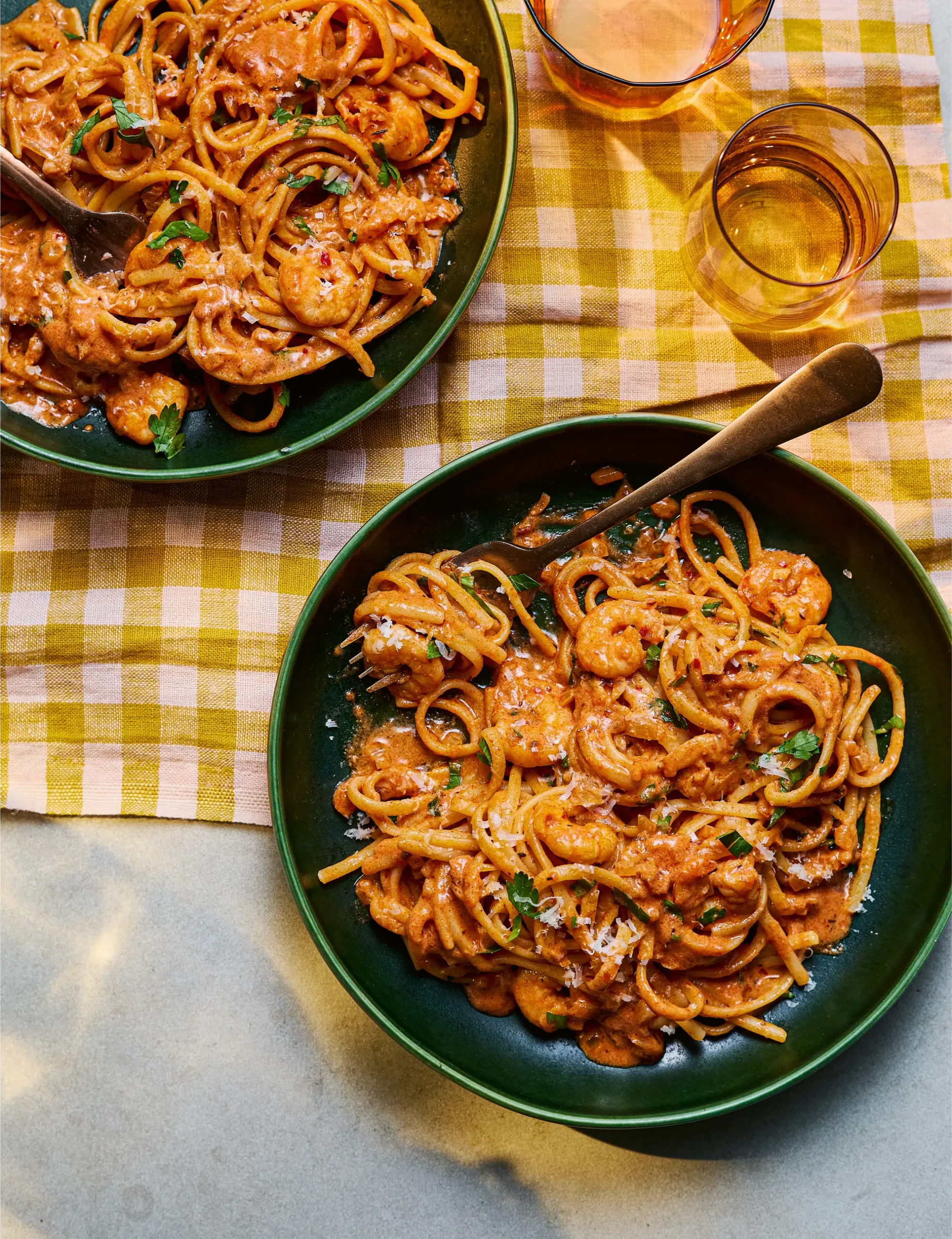
Cajun Prawn Pasta
Ingredients
- 180 g dried linguine
- 1 onion diced
- 1 tbsp tomato purée
- 1 tbsp Cajun spice
- 200 g raw king prawns
- 175 ml vegetable stock
- 40 g low-fat cream cheese
- 10 g parsley chopped
- Grated parmesan to serve
Instructions
- Cook the pasta in salted boiling water according to the packet instructions.
- Meanwhile, heat the oil in a large frying pan over a medium-high heat. Cook the onion for about 5 minutes, or until it softens.
- Add the tomato purée, Cajun spice and prawns. Cook for 2 more minutes, stirring occasionally, until the prawns are pink.
- Pour in the stock and add the cream cheese. Stir well and bring to a simmer.
- Drain the pasta, reserving some of the pasta cooking water. Add the pasta to the sauce, add the parsley, and toss together until creamy. If it needs loosening, add a splash of the reserved pasta water. If it’s too watery, keep stirring and the starch from the pasta will help thicken it. Taste and adjust the seasoning if needed.
- Dish it up and finish with grated Parmesan.