

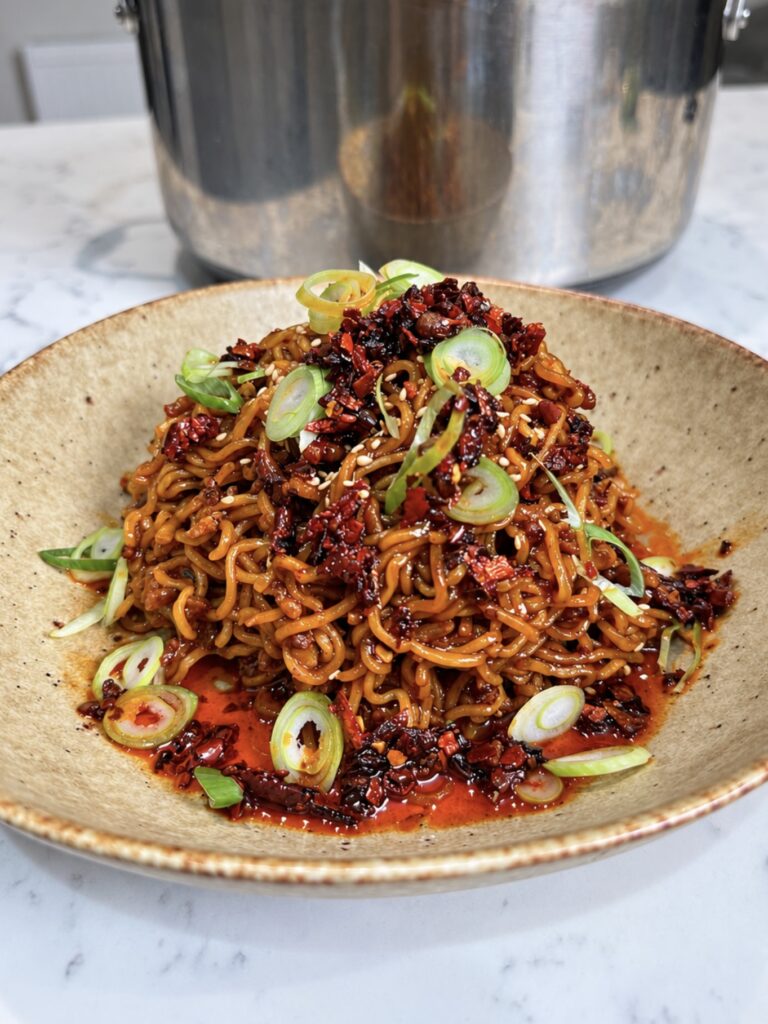
Sticky Gochujang Pork Noodles
These Sticky Gochujang Pork Noodles are exactly the sort of dinner I love – loads of flavour, minimal washing up and the whole thing cooked in one pan.
The minced pork gets properly browned until it’s starting to caramelise, then you add garlic, ginger and gochujang before building a sticky sauce with soy sauce, honey, mirin and sesame oil. Chicken stock goes straight into the same pan, followed by the noodles, so they cook directly in all that flavour rather than separately in water. Sticky Gochujang Pork Noodles
As the noodles soften, they absorb the stock while releasing starch into the pan. Give everything another minute or two over a high heat and what initially looks quite liquid turns into a thick, glossy sauce coating every strand of noodle and little piece of caramelised pork. Sticky Gochujang Pork Noodles
Then I finish it with spring onions, sesame seeds and plenty of crispy chilli oil.
It’s sweet, spicy, salty and savoury, and you can have it on the table in around 20 minutes.
What is gochujang?
Gochujang is a Korean fermented chilli paste traditionally made with ingredients including red chilli powder, fermented soybeans and rice.
If you’ve never cooked with it before, don’t think of it as simply another hot sauce.
It has chilli heat, but there’s also sweetness, saltiness and a deep savoury flavour from the fermentation.
That combination makes it brilliant for marinades, glazes, stir fries and sauces.
And because it’s concentrated, you don’t need loads.
There are two tablespoons in this recipe, which is enough to give the whole pan that unmistakable gochujang flavour without making the noodles ridiculously spicy. Sticky Gochujang Pork Noodles
Why gochujang works so well with pork
Pork and gochujang are such a good combination.
Minced pork has enough fat and richness to stand up to strong flavours, while the sweetness and chilli in gochujang cut through that richness.
Then you’ve got honey helping everything caramelise, soy sauce bringing salt and umami, mirin adding sweetness and acidity, and sesame oil bringing that unmistakable nutty flavour.
It’s a really simple sauce, but everything has a job.
Get the pork properly caramelised
This is probably the most important part of the recipe.
Get a large frying pan nice and hot before adding the minced pork.
Then give it time.
You’re looking for the pork to become properly browned and start caramelising around the edges, which should take around five or six minutes. Sticky Gochujang Pork Noodles
Don’t spend the entire time aggressively stirring it.
Break the mince apart, but then let some of it actually sit against the hot surface of the pan.
That’s how you develop colour.
If you constantly stir pale pork around a lukewarm pan, it’ll cook, but you won’t get anywhere near as much flavour.
You want little crispy, dark golden bits throughout.
Why a large frying pan works best
You want plenty of surface area for this recipe.
Firstly, it helps the pork brown rather than steam.
Secondly, once the noodles and stock go in, you need enough room to turn everything with tongs and get the noodles evenly coated.
And finally, a wide pan helps the liquid evaporate more quickly during the final stage.
That’s how you get from a pan containing quite a lot of chicken stock to those glossy, sticky noodles.
A wok would work brilliantly too.
Garlic and ginger
I’m using garlic and ginger paste because this is supposed to be a really quick dinner.
Two teaspoons of each gives you plenty of flavour without having to peel and finely chop anything.
Once the pork has browned, add the garlic, ginger and gochujang and cook everything together for around a minute. Sticky Gochujang Pork Noodles
Cooking the gochujang briefly helps wake up its flavour and allows it to coat the pork before any additional liquid goes in.
Keep everything moving at this point because garlic can catch quickly in a hot pan.
How to make the sticky Korean-style sauce
After the gochujang has cooked for a minute, add the soy sauce, honey, mirin and sesame oil.
That’s your flavour base.
The soy sauce brings saltiness and umami.
The honey balances the chilli and helps create that sticky finish.
The mirin adds sweetness and a little acidity.
The sesame oil brings richness and nuttiness.
Stir everything together and give it another minute so the pork gets completely coated before adding the chicken stock.
At this point it should already smell incredible.
What is mirin?
Mirin is a Japanese rice wine used extensively in Japanese cooking.
It has a sweet flavour and works brilliantly in sauces and glazes.
Although this is a Korean-style gochujang noodle recipe rather than a traditional Korean dish, mirin works really well alongside the soy, honey and gochujang.
You’ll find it in the world food or Asian section of most larger supermarkets.
If you can’t find mirin, you can use a little rice vinegar with some additional honey, although it won’t give you exactly the same flavour.
Why the noodles cook directly in the sauce
This is what makes the recipe so easy.
There’s no separate saucepan of boiling water.
Pour 500ml chicken stock straight into the pork mixture, then add 250g instant noodles. Sticky Gochujang Pork Noodles
As the noodles soften, use tongs to turn and separate them.
They absorb some of the chicken stock and all those flavours from the pork and sauce at the same time.
Meanwhile, starch released by the noodles helps thicken the liquid.
It’s essentially the same principle that makes pasta water so useful in pasta sauces.
Except here, we’re keeping all of that starch in the same pan from the beginning.
Don’t panic when you add the stock
When you pour 500ml of chicken stock into the pan, it might look like far too much liquid.
It isn’t.
The instant noodles are going to absorb a decent amount of it as they cook, and then we’re turning the heat up at the end to reduce what’s left.
Give the noodles around three or four minutes to soften, turning and separating them as they cook. Sticky Gochujang Pork Noodles
Then go high with the heat.
How to get the noodles properly sticky and glossy
The final minute or two makes a massive difference.
Once the noodles are soft, toss everything together over a high heat.
You’re encouraging excess moisture to evaporate while the starch, honey, gochujang and pork fat combine into a glossy sauce.
You’ll actually see the consistency change.
It’ll go from looking quite wet to coating the noodles.
That’s when it’s ready.
Don’t keep cooking once you’ve reached that stage because the noodles will continue absorbing liquid and you don’t want them dry or claggy.
How spicy are Gochujang Pork Noodles?
I’d put these firmly in the spicy-but-manageable category, although gochujang brands vary.
The honey and mirin both bring sweetness, which balances the chilli considerably.
The crispy chilli oil on top is optional, so that’s where you can really control the final heat.
If you’re cooking for someone who doesn’t enjoy much spice, use slightly less gochujang and skip the chilli oil.
If you want them properly fiery, do the opposite.
Crispy chilli oil is worth adding
The noodles already have loads of flavour, so technically you could stop with spring onions and sesame seeds.
But look at them with that crispy chilli oil over the top.
I’m adding it.
Aside from more chilli heat, you get the crunchy pieces of chilli and aromatics, plus that deep red oil running down through the noodles.
That contrast against the fresh spring onions and sesame seeds makes a massive difference to the finished bowl.
Can I add vegetables?
Definitely.
Because this is designed as a quick one-pan recipe, I’d stick to vegetables that cook relatively quickly.
Thinly sliced peppers would work.
Tenderstem broccoli chopped into smaller pieces would be good.
Pak choi, mangetout or shredded cabbage would all work too.
Just think about when you’re adding them.
Something like pepper can go in after the pork has browned, while pak choi only needs a couple of minutes towards the end.
You don’t want loads of watery vegetables going in with the pork at the beginning because they’ll make it harder to get that proper caramelisation.
Can I use beef or chicken mince instead?
Yes.
Beef mince would work brilliantly with exactly the same sauce.
Chicken or turkey mince will work too, although they’re generally leaner than pork, so I’d be particularly careful not to overcook them.
Pork is my first choice because the fat and flavour work so well with gochujang.
A proper one-pan dinner
And I mean one pan.
Not “one-pan noodles” where the recipe quietly asks you to boil the noodles in a second saucepan first.
The pork browns in the pan.
The sauce gets made in the pan.
The stock goes into the pan.
The noodles cook in the pan.
Done.
That’s what makes this such a good midweek recipe.
It’s fast, there’s hardly any washing up and you’re not sacrificing flavour for convenience.
Making this recipe in the US
These Sticky Gochujang Pork Noodles are really easy to make in America, with just a couple of useful terminology and measurement conversions.
500g minced pork is approximately 1.1 lb ground pork. What we call minced pork in the UK is ground pork in the US.
2 tablespoons gochujang is the same measurement in both countries.
3 tablespoons soy sauce, 2 tablespoons honey, 2 tablespoons mirin and 1 tablespoon sesame oil can all be measured exactly as written.
500ml chicken stock is approximately 2 cups plus 2 tablespoons chicken broth or chicken stock.
250g instant noodles is approximately 9 oz instant noodles.
Spring onions are generally called green onions or scallions in America.
Gochujang is increasingly easy to find in American supermarkets, but you can also find it in Korean and Asian grocery stores. Look for a thick red chilli paste rather than a bottled gochujang hot sauce – you want the concentrated paste for this recipe.
Mirin should usually be available in the Asian or international food section.
Ingredients
500g minced pork
2 tsp garlic paste
2 tsp ginger paste
2 tbsp gochujang
3 tbsp soy sauce
2 tbsp honey
2 tbsp mirin
1 tbsp sesame oil
500ml chicken stock
250g instant noodles
To serve
Sesame seeds
Spring onion, sliced
Crispy chilli oil
Method
Heat some oil in a large frying pan over a high heat. Add the minced pork and cook for 5–6 minutes, breaking it apart as it cooks, until browned and starting to caramelise.
Add the garlic paste, ginger paste and gochujang. Cook for another minute.
Add the soy sauce, honey, mirin and sesame oil. Stir everything together and cook for a minute until the pork is coated.
Pour in the chicken stock, then add the noodles. Bring to a simmer and cook for 3–4 minutes, turning and separating the noodles with tongs as they soften.
Toss everything together over a high heat for another minute or two until the sauce thickens and becomes glossy, coating the pork and noodles.
Spoon into bowls and finish with sliced spring onion, sesame seeds and crispy chilli oil if you like.
Equipment
Large frying pan or wok
Wooden spoon or spatula
Kitchen tongs
Measuring spoons
Measuring jug
Sharp knife
Chopping board
FAQs
What is gochujang?
Gochujang is a Korean fermented chilli paste with a combination of spicy, sweet, salty and savoury flavours. It’s thicker and more concentrated than a typical chilli sauce and is brilliant in marinades, stir fries and glazes.
Where can I buy gochujang?
Most large UK supermarkets now stock it in their world food or Asian ingredients section. You’ll also find a much wider selection in Korean and Asian supermarkets.
Are Gochujang Pork Noodles very spicy?
They have a noticeable chilli kick, but the honey and mirin help balance the heat. Different brands of gochujang vary, so you can reduce the amount if you’re particularly sensitive to spice.
Can I make these noodles less spicy?
Yes. Reduce the gochujang slightly and leave off the crispy chilli oil. I wouldn’t remove the gochujang completely because it’s a major part of the flavour of the sauce.
What is minced pork called in America?
Ground pork. They’re the same thing.
What are spring onions called in America?
They’re usually called green onions or scallions.
Can I use ramen noodles?
Yes. Instant ramen-style noodles are ideal, provided you’re using the plain noodles rather than adding the seasoning sachets. Cooking times vary, so keep an eye on the texture.
Do I need to cook the noodles before adding them?
No. That’s one of the best things about this recipe. The dry instant noodles cook directly in the chicken stock and sauce, absorbing flavour as they soften.
Why are my noodles too dry?
The heat may have been too high for too long or your particular noodles may have absorbed more liquid. Add another splash of hot chicken stock or water and toss everything together.
Why is my sauce too watery?
Once the noodles are cooked, turn the heat up and toss everything for another minute or two. The excess liquid should reduce while the starch from the noodles helps create a glossy sauce.
Can I use chicken or beef instead of pork?
Yes. Ground beef, chicken or turkey can all work with the same sauce. Pork is particularly good because its richness balances the spicy gochujang.
Can I make these noodles vegetarian?
You’d need to make a couple of changes. Swap the pork for a meat-free mince or crumbled firm tofu and use vegetable stock instead of chicken stock. Check your particular sauces are suitable for your dietary requirements too.
Can I make Gochujang Pork Noodles ahead of time?
They’re definitely best eaten straight from the pan. Noodles continue absorbing sauce as they sit, so leftovers will be drier. If reheating them, add a splash of water or stock to loosen everything.
Final thoughts
These Sticky Gochujang Pork Noodles are exactly what I want from a quick midweek dinner.
You’ve got caramelised pork, garlic, ginger and gochujang, then that sweet, salty and spicy sauce coating noodles that have cooked directly in the same pan.
No separate saucepan.
No complicated ingredients list.
And no watery sauce sitting at the bottom of the bowl.
The biggest thing is getting plenty of colour on the pork at the beginning and then giving everything that final blast of heat once the noodles are cooked. That’s what turns the sauce thick and glossy so it properly clings to every strand.
Pile it into a bowl, scatter over spring onions and sesame seeds and then get a good spoonful of crispy chilli oil over the top.
That’s my kind of dinner.
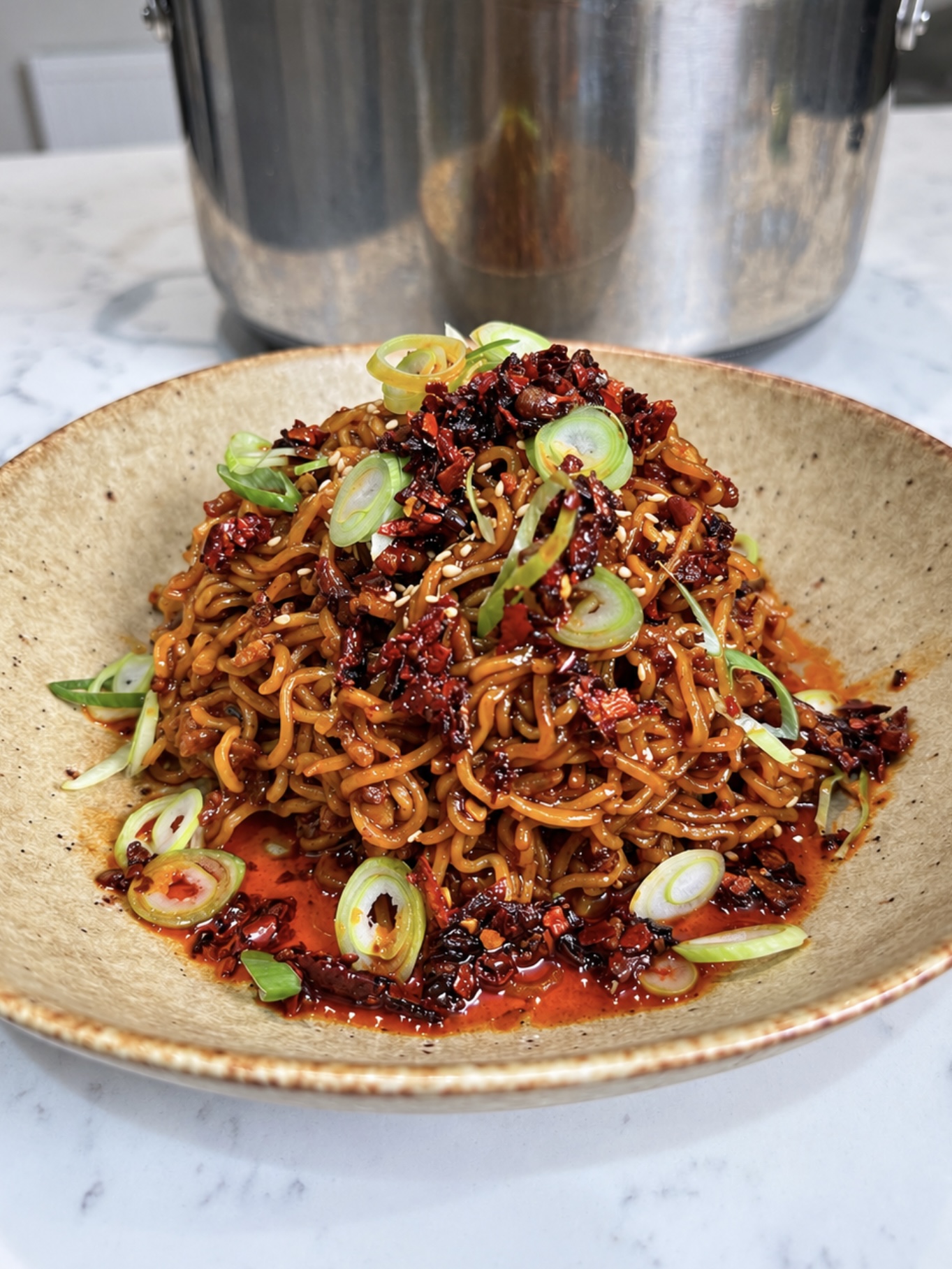
Sticky Gochujang Pork Noodles
Ingredients
- 500 g minced pork
- 2 tsp garlic paste
- 2 tsp ginger paste
- 2 tbsp gochujang
- 3 tbsp soy sauce
- 2 tbsp honey
- 2 tbsp mirin
- 1 tbsp sesame oil
- 500 ml chicken stock
- 250 g instant noodles
To serve:
- Sesame seeds
- Spring onion sliced
- Crispy chilli oil
Instructions
- Heat some oil in a large frying pan over a high heat. Add the minced pork and cook for 5-6 minutes, breaking it apart as it cooks, until browned and starting to caramelise.
- Add the garlic and ginger and gochujang. Cook for another minute.
- Add the soy sauce, honey, mirin and sesame oil. Stir it all together and cook for a minute until the pork is coated.
- Pour in the chicken stock, then add the noodles. Bring it to a simmer and cook for 3-4 minutes, turning and separating the noodles with tongs as they soften.
- Toss everything together over a high heat for another minute or two until the sauce thickens and becomes glossy, coating the pork and noodles.
- Spoon into bowls and finish with the spring onion, sesame seeds, and crispy chilli oil if you like.